
Domain name length directly governs cognitive load, brand recall velocity, and user trust formation – all of which are measurable determinants of conversion rate performance and long-term brand equity in competitive digital markets. Short-form domain identifiers, particularly those in the 5-7 character range, reduce phonological working memory strain and accelerate direct-navigation traffic generation, outperforming longer keyword-aggregated URLs across virtually every measurable brand interaction metric. The correlation between lexical brevity, perceptual fluency, and commercial brand authority is not theoretical; it is validated across behavioral psychology research, domain aftermarket valuation models, and the naming decisions of the world’s most recognized technology companies.
Most founders spend weeks debating logo colors and product positioning – yet they register a 17-character domain name in under two minutes without a second thought. That single overlooked decision quietly shapes every user touchpoint that follows: the first impression on a business card, the spoken recommendation from a satisfied customer, the typed URL in a browser bar, and the visual weight of a brand name in a Google search result.
If you are building a brand that needs to last, understanding why domain length matters is not optional. It is foundational.
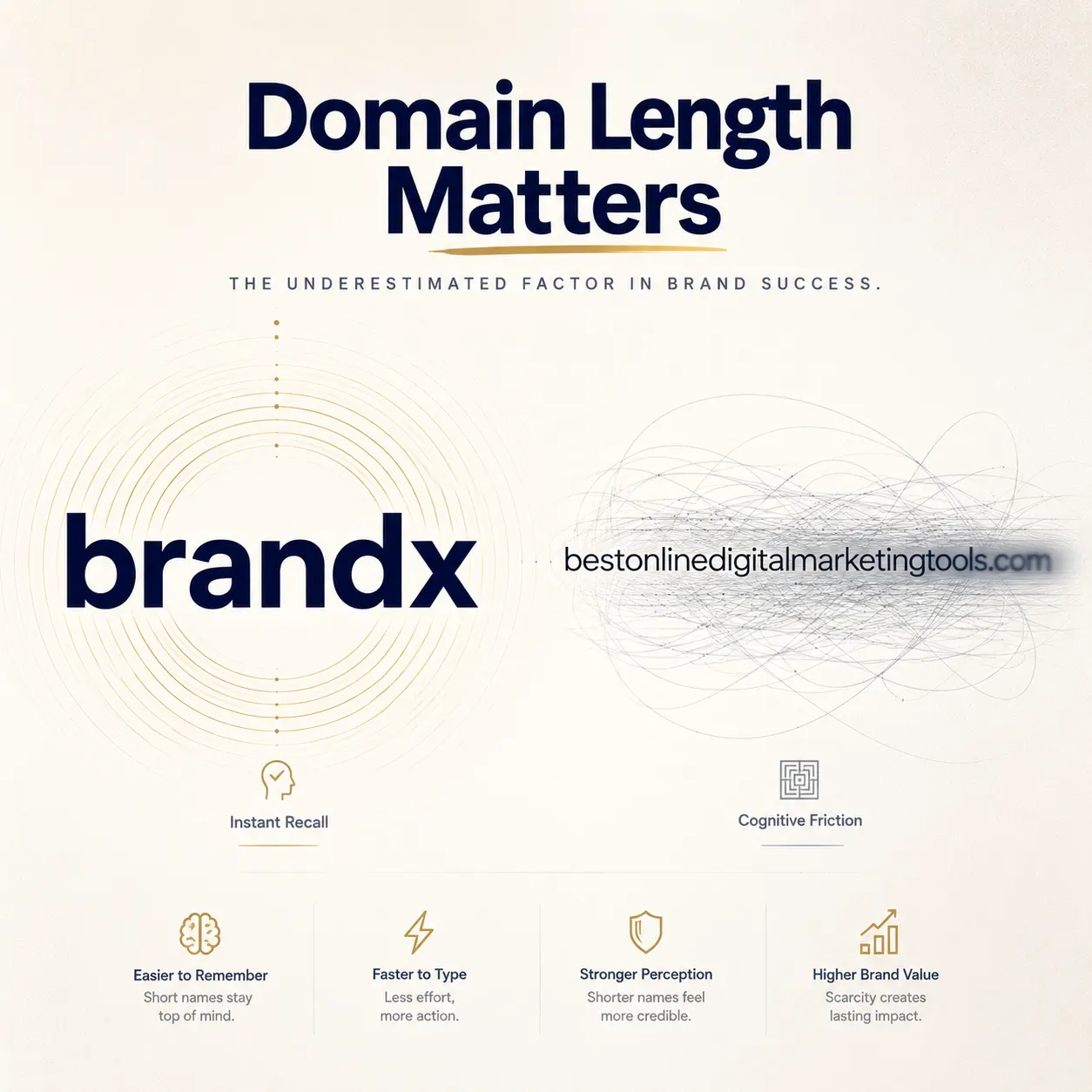
The Cognitive Science Behind Why Domain Length Matters
Every character added to a domain name increases what cognitive scientists call processing fluency – the ease with which the brain absorbs, evaluates, and stores new information. When processing fluency is low, users experience micro-friction. That friction compounds invisibly across thousands of brand impressions and, over time, erodes recall, trust, and engagement.
How Working Memory Limits Your Domain’s Reach
Human working memory operates within strict capacity constraints. Research in cognitive psychology, dating back to Miller’s foundational work on the “magical number seven,” consistently shows that people can reliably hold only a small number of distinct units of information at once. A domain name exceeding 8-10 characters begins to exceed the comfortable threshold for effortless encoding.
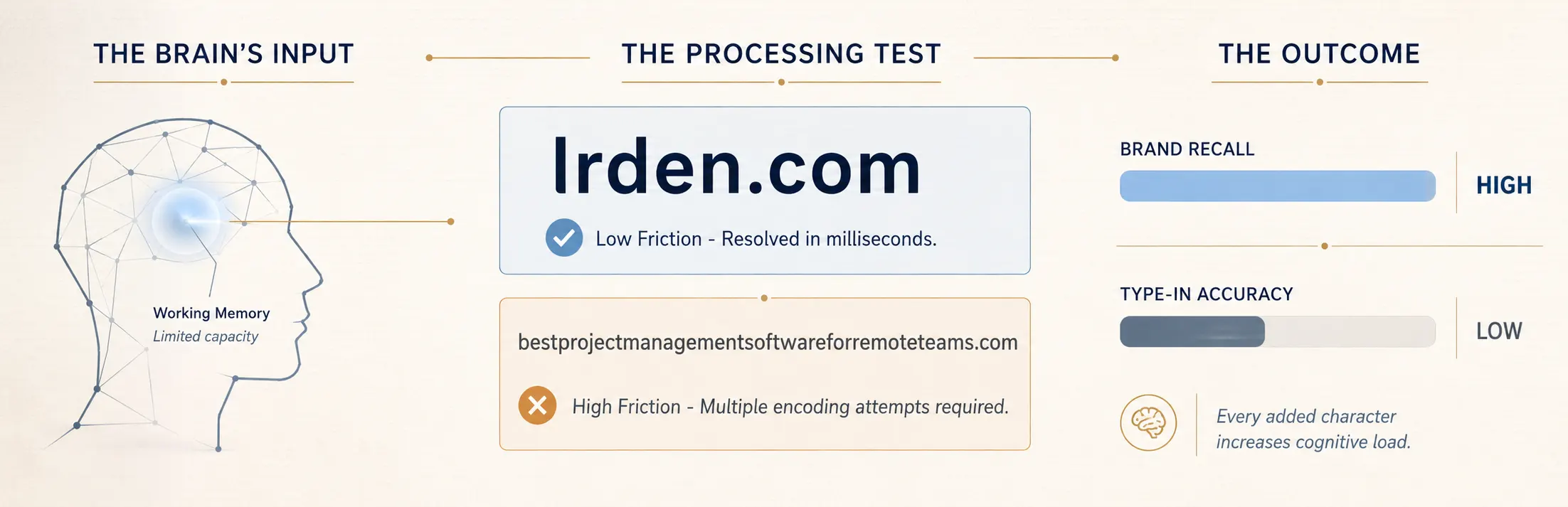
Consider the difference between remembering “lrden.com” and remembering “bestdomainnamesforsalenow.com.” One resolves in a fraction of a second. The other requires deliberate cognitive effort – effort that most users are unwilling to invest in a brand they have only just discovered.
Short domains reduce that friction to near zero.
The “Radio Test”: Does Your Domain Work Without a Screen?
Brand professionals frequently apply the “radio test” to domain names: if you heard the domain read aloud in a 30-second radio ad, could you spell it and find it correctly afterward? Long, hyphenated, or phonetically ambiguous domains fail this test consistently.
A concise, phonetically clean domain passes the radio test every time. It travels fluidly through word-of-mouth, podcast sponsorships, conference presentations, and every other channel that operates without a hyperlink. That frictionless oral portability is an invisible competitive advantage that most businesses never fully account for.
Why Domain Length Matters for Brand Trust and Perceived Authority
Trust is the currency of the internet. Before a single page of your website loads, users have already formed an opinion based on the URL alone. Domain brevity plays a direct and measurable role in shaping that first impression.
Short Domains Signal Established Authority
When a domain is brief and visually clean, users instinctively associate it with a more established, credible, and premium brand. This is not a superficial perception. According to research on domain psychology and brand recall, short domain names create an immediate clarity signal – users experience higher confidence that they have found a legitimate, professional destination.
Long, cluttered domains, by contrast, often carry subconscious associations with spam, low-budget operations, or failed keyword-stuffing strategies.
The Trust-Conversion Connection
Trust directly precedes conversion. A user who does not trust a domain will not subscribe, purchase, or return. Research from the domain authority and conversion rate space demonstrates that cleaner, more memorable domains generate measurably higher click-through rates in search engine results pages (SERPs), reduced bounce rates, and higher repeat visit frequencies.
Shorter names reduce what UX designers call “cognitive friction” – the invisible resistance users experience between encountering a brand and deciding to engage with it. Every character you remove from a domain name is a small act of trust-building.
The Sweet Spot: Why 6-Letter Domains Hit the Perfect Balance
Not all short domains are created equal. Single-character and two-character domains are virtually nonexistent on the open market. Three- and four-letter .com domains command prices that put them firmly out of reach for most businesses. Five- to seven-letter domains, however, represent the accessible premium tier – short enough for effortless recall, long enough to be genuinely brandable.
Six-letter domains occupy an especially powerful position in this spectrum. They sit at the intersection of brevity, phonetic richness, and visual balance – long enough to carry personality, short enough to be mastered instantly.
If you are looking to acquire a domain that delivers that perfect balance, exploring 6 letter domain names for sale is one of the highest-leverage branding investments a founder or business can make.
Famous Brands That Prove the 6-Character Formula
Some of the world’s most recognized brands have built their digital identity on short, memorable domain structures. Consider how brands like Google (6 letters), Amazon (6 letters), Spotify (7 letters), and Notion (6 letters) leverage brevity to achieve instant global recall. Their domain length is not coincidental. It reflects deliberate naming architecture designed for maximum cognitive retention.
| BRAND | DOMAIN | CHARACTER COUNT | INDUSTRY |
|---|---|---|---|
| google.com | 6 | Technology / Search | |
| Amazon | amazon.com | 6 | E-Commerce / Cloud |
| Notion | notion.com | 6 | Productivity SaaS |
| Stripe | stripe.com | 6 | Fintech Payments |
| Canva | canva.com | 5 | Design Software |
| Shopify | shopify.com | 7 | E-Commerce Platform |
| Zoom | zoom.com | 4 | Video Communications |
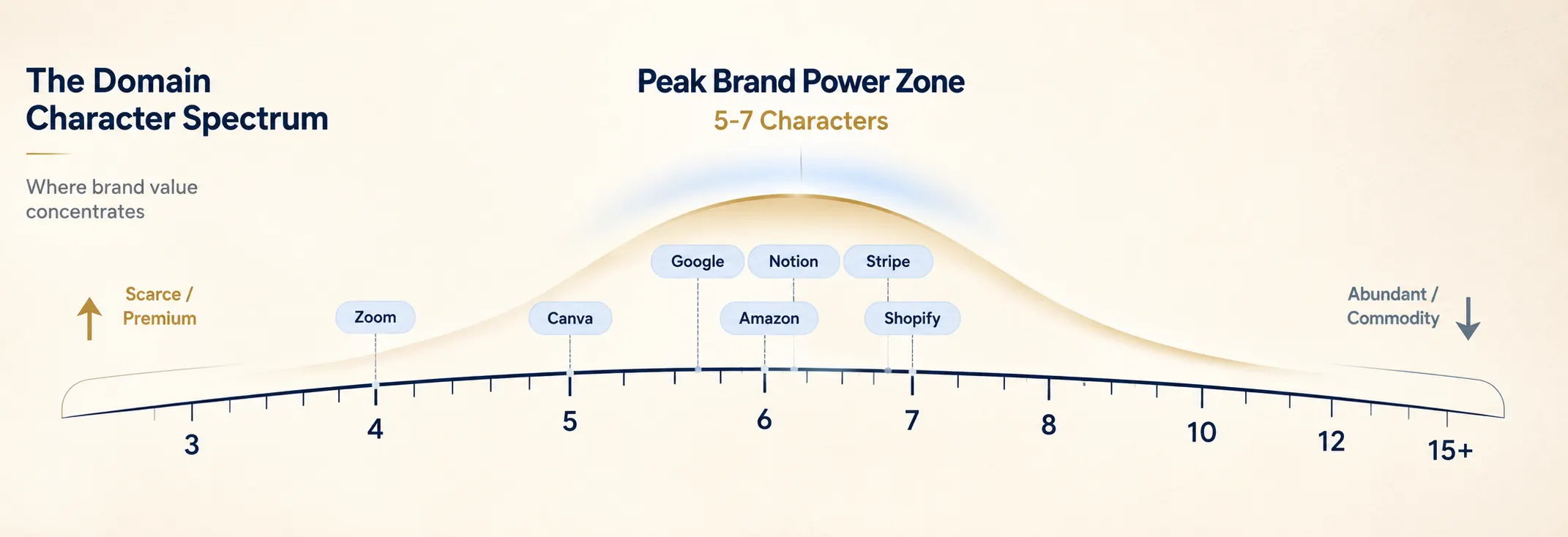
The pattern is unmistakable. Elite brands do not use long, descriptive domain names. They use short, distinct, phonetically elegant ones.
Domain Length and Its Direct Impact on SEO Performance
A common misconception is that longer, keyword-rich domain names provide a significant SEO advantage. While exact-match domains (EMDs) once carried direct ranking weight, Google’s algorithm updates have substantially reduced that benefit. Today, the SEO value of a domain name lies primarily in the indirect signals it generates through branding, memorability, and user behavior.
Direct-Navigation Traffic: A Signal Google Pays Attention To
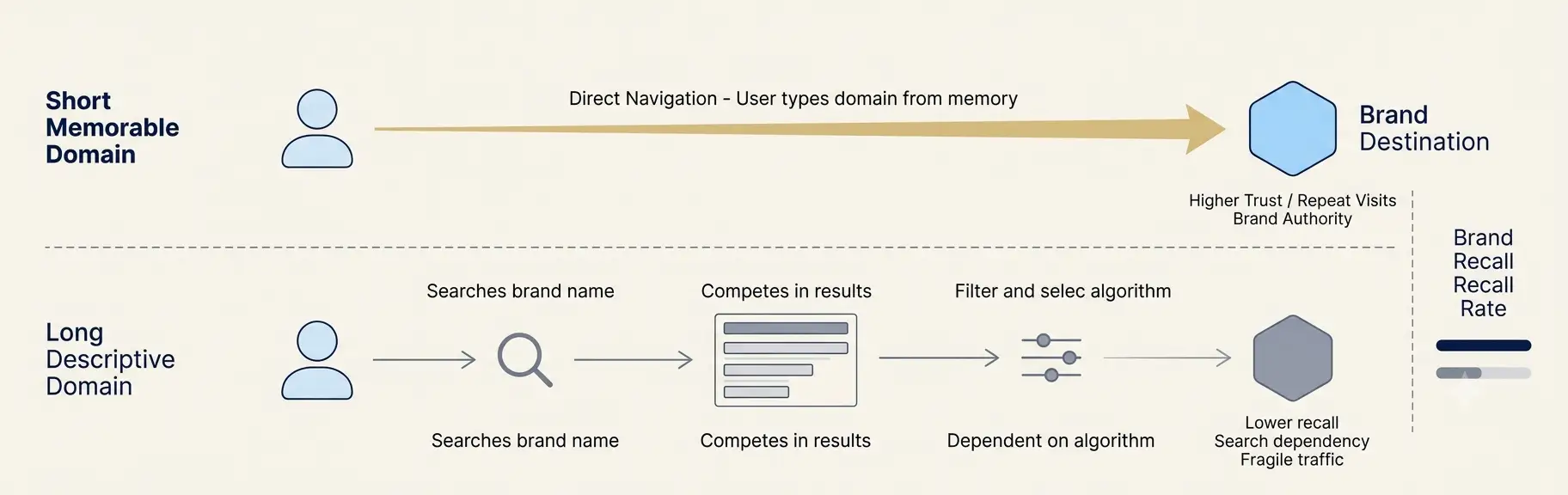
When users type a domain name directly into a browser address bar without using a search engine, they generate what is known as direct-navigation traffic or “type-in traffic.” This is one of the clearest behavioral signals of brand authority, and it correlates strongly with domain length.
Short, memorable domains accumulate type-in traffic organically as brand awareness grows. Longer domains generate far less type-in traffic because users cannot reliably remember or spell them without a search engine’s assistance.
According to SEO strategy research, modern search algorithms prioritize brand memorability and authority accumulation over keyword inclusion in domain strings. A brand that generates consistent direct navigation signals builds domain authority faster and more durably than one relying on EMD strategies.
Click-Through Rates in Search Results
Domain name visibility in search snippets also influences click-through behavior. Clean, concise domain names in the URL breadcrumb portion of a search snippet appear more trustworthy and professional to users scanning results. A brandable short domain in the SERP communicates credibility before the user reads a single word of the title or description.
Backlink Anchor Text Efficiency
When other websites link to your brand, they frequently use your domain name as anchor text. A short, distinctive domain name produces cleaner, more natural-looking anchor text at scale – contributing to a healthier backlink profile and reducing the likelihood of over-optimized or awkward link patterns.
Short vs. Long Domains: A Side-by-Side Comparison
Understanding why domain length matters becomes immediately practical when you place short and long domains directly side by side across the metrics that drive brand success.
Comparison Table: Short Domains vs. Long Domains
| METRIC | SHORT DOMAIN (5-7 CHARACTERS) | LONG DOMAIN (15+ CHARACTERS) |
|---|---|---|
| Memory Retention | High – single encoding event | Low – requires repeated exposure |
| Spoken Communication | Effortless – passes radio test | Difficult – prone to misspelling |
| Type-In Traffic Potential | High | Very low |
| Perceived Brand Authority | Premium and established | Commodity or niche-specific |
| Logo and Visual Design | Clean and balanced | Cluttered, reduced at small sizes |
| Email Address Professionalism | Strong (e.g., name@lrden.com) | Weak, long, unprofessional |
| Domain Resale / Asset Value | High – scarcity premium | Low – abundant supply |
| Voice Search Compatibility | Excellent | Poor |
| Social Handle Availability | More likely available | Often taken or awkward |
| SEO Authority Accumulation | Faster via brand signals | Slower, dependent on content volume |
This comparison makes the case clearly: across nearly every dimension that drives long-term brand performance, shorter domains hold a structural advantage.
Common Mistakes Businesses Make When Choosing a Domain Name
Knowing why domain length matters is only useful if it translates into better decisions. Here are the most frequent errors businesses make – many of which are difficult or expensive to reverse.
Mistake 1: Prioritizing Descriptive Length Over Distinctiveness
Founders often choose domain names that describe exactly what the business does: “bestaffordablewebdesignservices.com.” The logic seems sound – if users search for what you do, they will find you. In practice, this produces a domain that is forgettable, visually heavy, and indistinguishable from dozens of similar-sounding competitors.
Distinctiveness and memorability outperform description every time. Users do not need to understand your entire value proposition from your domain name – they just need to remember it.
Mistake 2: Adding Hyphens to Work Around Unavailability
When a preferred domain is taken, many businesses resort to hyphenated versions like “best-web-design.com.” Hyphens create immediate problems: they are easy to forget when typing, they signal low authority, they are associated with spam domains, and they are impossible to communicate verbally without confusion.
If your ideal domain is unavailable, the correct response is to find a new short, brandable name – not to compromise the domain structure.
Mistake 3: Ignoring the .com Extension
Alternative TLDs like .io, .co, .app, and .tech have grown in popularity, but the .com extension retains dominant authority in user trust and recognition. Research indicates that .com domains command meaningfully higher click-through rates than lesser-known extensions. For a primary brand domain, .com remains the strongest choice – and acquiring a short .com domain is worth the premium investment.
Mistake 4: Choosing a Name That Sounds Like a Competitor
Phonetic similarity to a well-known brand creates legal risk and brand confusion. A domain that sounds like a bigger competitor will consistently lose brand attribution – users searching for the familiar brand will not remember which variation belongs to you.
Mistake 5: Registering Without Thinking About Future Scalability
A domain that is tied too specifically to a current product category can become a liability when the business expands. Short, brandable domains carry no categorical baggage. They scale with the business rather than constraining it.
How to Evaluate a Short Domain Before Purchasing
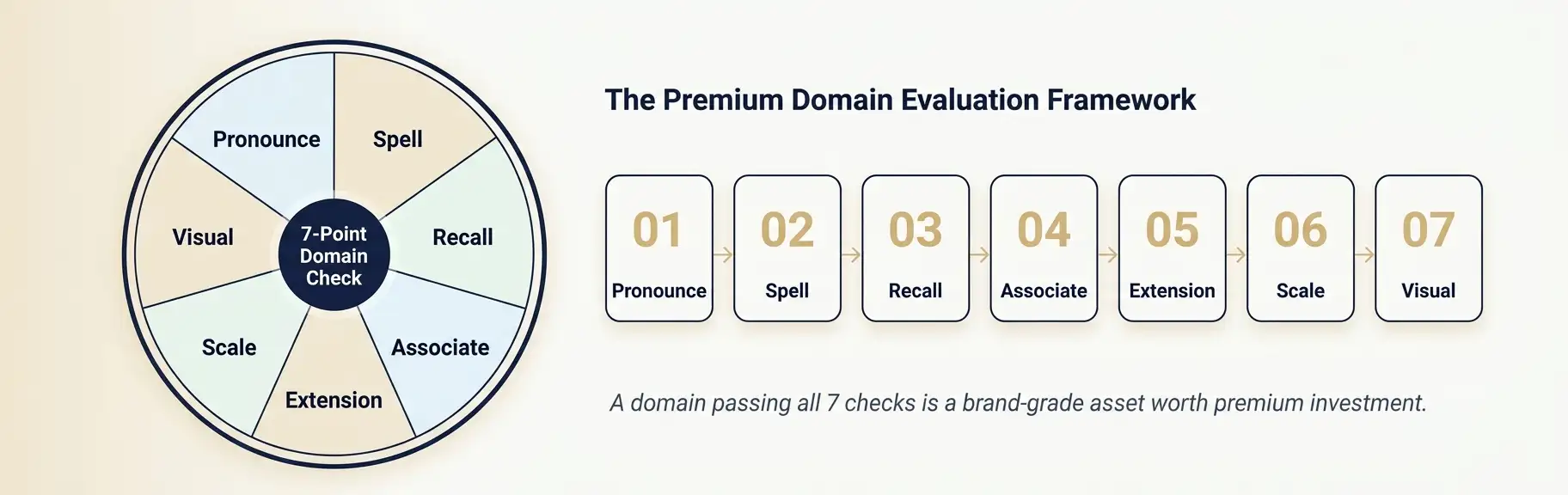
When assessing whether a short domain is worth its asking price, apply the following framework:
- Pronounceability test: Can you say it aloud clearly to someone unfamiliar with the brand?
- Spelling test: Can someone who hears it aloud spell it correctly on the first attempt?
- Memory test: Can someone remember it 24 hours after seeing it once?
- Association test: Does it carry any negative connotations in major languages or cultures?
- Extension test: Is the .com version available, or is it the one you are acquiring?
- Scalability test: Will this name still make sense if the business pivots or expands its offerings?
- Visual test: How does it look on a business card, logo, or social media avatar at small sizes?
A domain that passes all seven tests is an asset worth acquiring at a premium price. A domain that fails even one of these tests deserves careful reconsideration.
Expert Tips for Maximizing Brand Value Through Domain Length
Tip 1: Treat Your Domain as a Long-Term Brand Asset
Your domain is not a utility – it is a brand asset with compounding value. Short, memorable .com domains appreciate in market value over time as the broader supply of premium short names continues to shrink. Investing in a quality domain early reduces acquisition cost and builds equity that grows alongside the business.
Tip 2: Align Domain Length with Your Distribution Channels
If your primary distribution channels include paid media, podcasting, influencer partnerships, or out-of-home advertising, a short domain is even more critical. Every paid impression that includes an unmemorable URL is a wasted brand moment. In contrast, a short domain turns every impression into a potential direct-navigation visit.
Tip 3: Think in Syllables, Not Just Characters
Character count is a proxy for what really matters: syllable count and phonetic ease. A 6-character domain with two clean syllables is dramatically more memorable than a 6-character domain with an awkward consonant cluster. When evaluating short domains, always test them phonetically, not just visually.
Tip 4: Secure Social Handles That Match Your Domain
Brand coherence across domain and social handles accelerates authority accumulation. When your domain name is short and distinctive, matching social handles are more likely to be available. Consistent naming across web and social creates a unified identity signal that supports both brand recognition and SEO.
Tip 5: Consider Domain Length in the Context of Email
Your team’s professional email addresses will carry your domain in every communication. A short domain produces clean, professional email addresses that reinforce brand credibility in every inbox interaction. A long domain produces unwieldy email addresses that dilute that credibility.
The Rising Value of Short Domains in the AI Search Era
The emergence of AI-powered search interfaces – including Google’s AI Overviews, Perplexity, and agentic search models – has introduced new dynamics into how domains influence brand visibility. AI systems cite and surface trusted sources, and trust signals are increasingly tied to brand authority rather than keyword density.
According to recent domain strategy guidance for the AI search era, modern brand visibility in AI-mediated search environments depends on consistent brand presence and authority accumulation. Short, memorable domain names accelerate this process by driving direct navigation signals, generating more natural backlink patterns, and reinforcing consistent brand identity across every touchpoint.
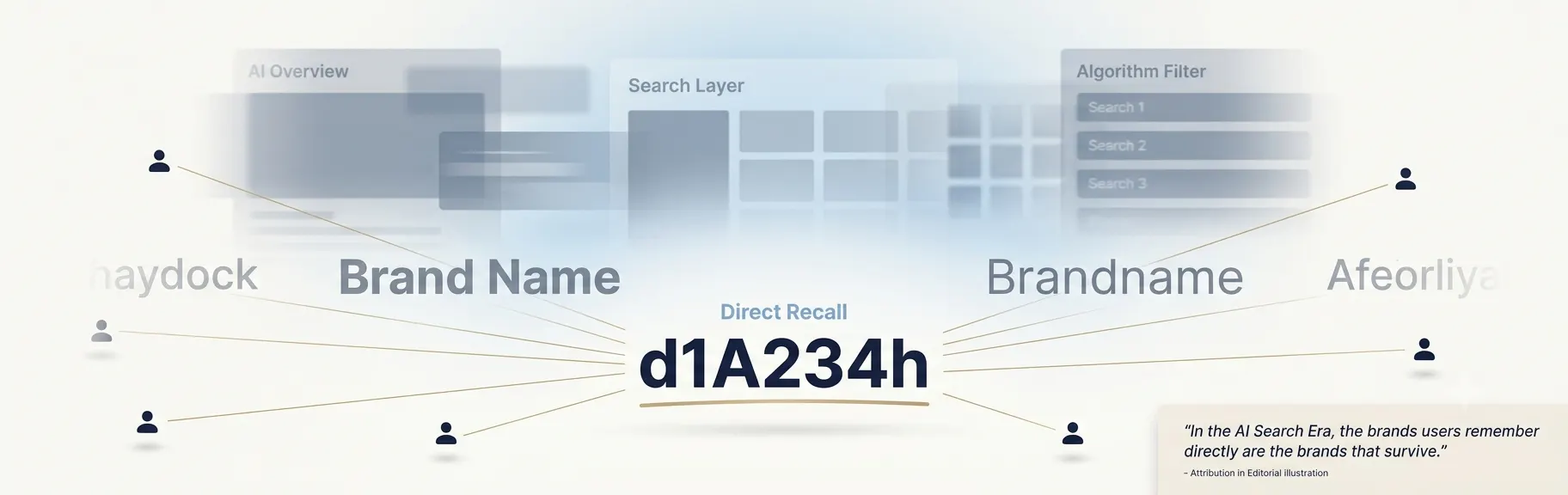
In an environment where AI interfaces increasingly answer queries without delivering clicks, the brands that survive and thrive will be those with names that users actively seek by typing directly – bypassing intermediary search layers entirely. That behavioral pattern begins with a domain that people can actually remember.
Step-by-Step: How to Choose the Right Short Domain for Your Brand
Choosing a short domain does not have to be a process of luck. Follow these steps to find a name that delivers lasting brand value:
- Define your brand identity pillars: What emotions, values, and associations do you want the name to evoke? List 5-10 descriptive words.
- Generate 6-character candidates: Using your identity pillars as a starting point, brainstorm combinations of 5-7 letters that form clean, pronounceable units. Aim for CVCVCV (consonant-vowel) patterns where possible for maximum oral fluency.
- Run the seven-point evaluation: Apply the pronounceability, spelling, memory, association, extension, scalability, and visual tests described earlier in this article.
- Check trademark databases: Search the USPTO (for U.S. brands) and EUIPO (for European brands) to ensure your candidate names are not registered trademarks in your operating categories.
- Browse curated premium domain marketplaces: Rather than relying on random availability checks, explore curated listings of premium short .com domains. Platforms specializing in 6 letter domain names have already done the pre-screening work, surfacing names that meet the core criteria for brand-grade quality.
- Validate with a small audience: Before purchasing, test 2-3 finalist names with a small group representative of your target audience. Ask them to write down the name 30 minutes after hearing it once. The name with the highest accurate recall rate wins.
- Secure the domain and matching handles simultaneously: Once you have chosen your name, register the domain and claim matching social handles in the same session.
Frequently Asked Questions
Q1: Why does domain length matter for brand success? Domain length matters because shorter domain names reduce cognitive load, improve memorability, pass the “radio test” for verbal communication, generate more direct-navigation traffic, and signal brand authority to users before they even visit your website. Research consistently shows that brevity in a domain name correlates directly with higher trust perception and stronger conversion rates.
Q2: What is the ideal domain name length for a brand? The ideal domain name length for a brand is generally between 5 and 7 characters. This range is short enough for effortless recall while remaining long enough to carry phonetic personality and distinctiveness. Six-letter domains in particular represent a sweet spot between brevity and brandability, which is why they are among the most sought-after assets in the premium domain market.
Q3: Do shorter domain names rank better in Google? Shorter domain names do not carry a direct ranking advantage from length alone. However, they generate indirect SEO benefits through higher direct-navigation traffic, stronger brand recall leading to more branded search volume, cleaner backlink anchor text patterns, and higher click-through rates in search engine results pages – all of which contribute to improved search visibility over time.
Q4: Are 6-letter domains worth buying? Yes. Six-letter .com domains represent one of the best value-to-quality ratios in the premium domain market. They are short enough for strong brand performance, distinctive enough to build a unique identity, and scarce enough to appreciate in value over time. For businesses serious about brand equity, investing in a quality 6-letter domain is a high-leverage decision.
Q5: Why domain length matters in voice search and AI interfaces? Voice search and AI-powered interfaces prioritize names that can be communicated clearly in audio form. Long, complex domain names fail in voice contexts because they are difficult to dictate, spell, or recall after a single audio exposure. Short domains succeed because they are phonetically simple, easy to repeat, and easy to retain – making them structurally better suited for the voice and AI search era.
Q6: How does domain length affect email marketing professionalism? A short domain produces clean, professional email addresses that reinforce brand credibility in every email inbox interaction. A long domain produces unwieldy email addresses that can appear unprofessional or spammy, reducing open rates and undermining the trust that email marketing depends on.
Q7: Where can I find premium short 6-letter domains for sale? You can find a curated selection of premium 6 letter domain names for sale at LRDEN.com, which specializes in short, brandable .com domains ideal for startups, enterprises, and investors building long-term brand assets.
Why Domain Length Matters More Than Most Brands Realize
Every aspect of brand-building compounds over time – and domain length is the compounding factor that most businesses overlook until the cost of correction becomes prohibitive. Short domains generate more direct-navigation traffic, build trust faster, perform better in paid and organic channels, scale across voice and AI search environments, and accumulate resale value as assets.
The brands that dominate their categories did not arrive at short, memorable names by accident. They understood from the beginning that a name people can remember, spell, and say aloud is a structural competitive advantage – one that works silently in the background of every marketing campaign, every customer conversation, and every digital impression.
Understanding why domain length matters is the first step. Taking action is the next one. If you are ready to secure a short, premium domain that positions your brand for long-term success, browse our curated inventory of premium 6-letter .com domains at LRDEN and find the name your brand deserves.