
Buying a premium domain name without overpaying requires benchmarking the asking price against comparable sales data, verifying true ownership before any funds move, and negotiating through escrow rather than direct wire transfer. This buyer’s framework applies the same due-diligence standards that domain investors and brand strategists use when acquiring six-figure names. Follow it, and you can secure a short, brandable domain at a price that reflects its real market value – not its emotional value to you.
If you have ever fallen in love with a domain name and then panicked at the quote, you already understand why a structured buying process matters. Premium domain pricing looks arbitrary from the outside, but it follows patterns that experienced buyers learn to read. Before you approach a seller, it helps to browse an established premium 6-letter domain marketplace so you can compare live asking prices, extension availability, and naming patterns against whatever name you have your eye on. That single step alone will recalibrate your expectations and give you a baseline for what “fair” actually looks like in this market.
This guide breaks the entire acquisition process into a repeatable framework: how to evaluate a domain’s real worth, how to research comparable sales, how to approach a seller without tipping your hand, how to negotiate without alienating them, and how to close the transfer safely. By the end, you will have a checklist you can reuse for every future domain purchase.
What Actually Makes a Domain Name “Premium”?
A premium domain name is a domain that carries value beyond the standard annual registration fee because of its length, memorability, keyword relevance, or brand potential. Unlike a freshly registered domain, a premium name is usually already owned by an individual, an investor, or a company, and it must be purchased on the secondary market.
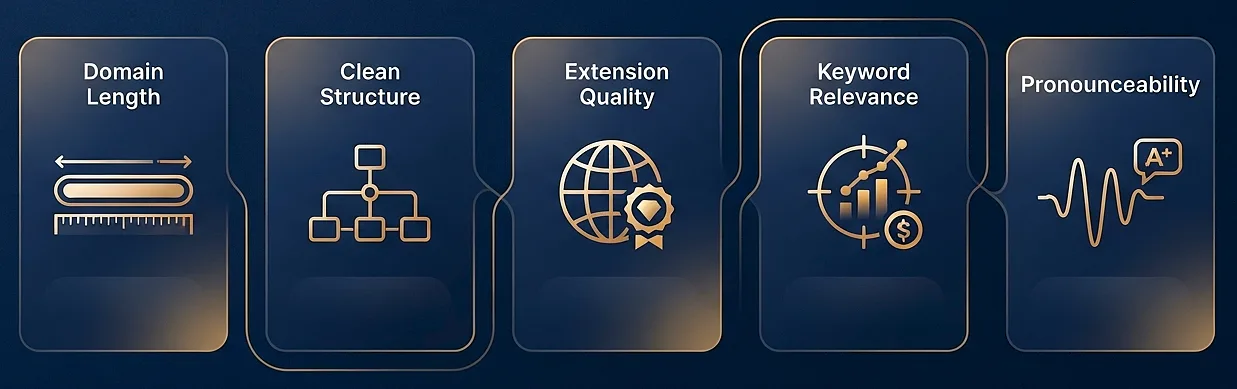
Most domains earn “premium” status through a combination of the following traits:
- Short character count – four to six letters is the sweet spot for brandability and typing ease.
- Clean structure – no hyphens, no numbers, and no awkward letter combinations.
- High-value extension – .com remains the default trust signal for most industries, though .io, .ai, and .co carry weight in tech and startup circles.
- Keyword relevance – a name that matches or closely echoes a high-search-volume term in a lucrative niche.
- Pronounceability – a name a person can hear once and spell correctly without guessing.
Not every short domain is automatically expensive, and not every long domain is automatically cheap. Context matters. A six-letter .com in a competitive industry like finance or health will typically outprice an eight-letter .com in a niche hobby space, even though the second one is longer. Consequently, evaluating a domain always starts with matching its structure to genuine market demand rather than judging length in isolation.
Why Premium Domain Prices Vary So Widely
Domain pricing does not follow a fixed formula the way a physical product’s cost does. Instead, it behaves more like real estate or fine art: value is driven by scarcity, comparable sales, and how badly a specific buyer wants that specific asset. Understanding the underlying drivers helps you separate a justified asking price from an inflated one.
1. Scarcity of Short, Clean Combinations
There are only so many pronounceable four, five, and six-letter combinations in the English alphabet, and the vast majority of them were registered decades ago. Because supply is essentially fixed while demand from new businesses keeps growing, short domains behave like a shrinking inventory asset.
2. Commercial Search Intent
A domain that mirrors a term with strong commercial search volume, such as a product category or service type, carries more resale and direct-traffic value than a name with no search history at all. Sellers who understand this will often price accordingly.
3. Past Sale History and Comparable Transactions
Publicly reported domain sales create pricing benchmarks. If a similar-length, similar-quality domain sold recently in a comparable niche, that sale becomes the anchor point both buyer and seller will reference during negotiation.
4. Seller Motivation and Holding Cost
An investor sitting on hundreds of domains and paying renewal fees on all of them is often more flexible than a hobbyist who owns one domain and has an emotional attachment to it. Reading seller motivation correctly is one of the most underrated negotiation skills in this market.
The Step-by-Step Buyer’s Framework
Here is the exact sequence experienced buyers follow when learning how to buy a premium domain name without overpaying. Treat this as a checklist you can revisit for every acquisition.
Step 1: Define Your Non-Negotiable Criteria First
Before you start browsing, write down your must-haves: maximum character count, acceptable extensions, budget ceiling, and whether the name needs to match an exact keyword or simply feel brandable. Buyers who skip this step tend to overpay because they fall for a name outside their original criteria and rationalize the extra cost afterward.
Step 2: Build a Comparable Sales List
Pull together five to ten recent sales of domains that resemble your target in length, extension, and niche. Public domain sale reports and marketplace sold-listings pages are the best sources for this. This list becomes your pricing anchor for every later negotiation step.
Step 3: Verify Ownership and Registration Status
Run a WHOIS lookup through ICANN’s public database to confirm who currently controls the domain, check whether it is locked at the registrar, and note the expiration date. A domain nearing expiration with an unresponsive owner is a very different negotiation than one held by an active investor with years left on the registration.
Step 4: Make Contact Without Overexposing Your Interest
Reach out through the listed contact method, whether that is a marketplace inquiry form, a “for sale” landing page, or a direct email pulled from WHOIS records. Keep your first message short and neutral. Avoid describing your business plans in detail, since revealing high commercial intent can push the asking price upward.
Step 5: Anchor the Negotiation With Data, Not Emotion
When the seller responds with a number, counter using your comparable sales list rather than a gut-feel figure. For example: “Recent sales of similar six-letter .com names in this category have closed between $X and $Y, so I’d like to propose a number in that range.” This keeps the conversation grounded in evidence instead of back-and-forth guessing.
Step 6: Move the Transaction Through Escrow
Once you agree on a price, never wire funds directly to the seller. Use a licensed escrow service built for domain name transactions that holds your payment until the domain transfer is confirmed on your end. This single habit eliminates the majority of domain-buying fraud risk.
Step 7: Confirm the Transfer and Lock In Your Asset
After escrow releases the domain, log into your registrar account, confirm ownership details, enable registrar lock, and set up auto-renewal in line with ICANN’s official transfer policy guidelines. Only then should escrow release payment to the seller. This closes the loop and protects both parties.

How to Determine Fair Market Value Before You Negotiate
Pricing a premium domain accurately is part art, part data analysis. The table below summarizes the core valuation factors buyers should weigh before setting a target price.
| Valuation Factor | Why It Matters | Buyer Impact |
|---|---|---|
| Character length | Shorter domains are scarcer and easier to brand | Higher price ceiling for 4-6 letter names |
| Extension (.com vs. others) | .com still carries the strongest trust signal for most buyers | Expect a notable premium over alternative extensions |
| Keyword search volume | Names matching high-intent search terms attract type-in traffic | Justifies a higher offer if traffic data is verifiable |
| Comparable sales | Prior transactions set realistic market expectations | Primary anchor for any counteroffer |
| Seller holding cost | Investors with large portfolios often negotiate faster | More room to negotiate down from the asking price |
| Brandability | Pronounceable, memorable names support long-term marketing | Worth a premium even without exact keyword match |
Marketplace vs. Direct Outreach vs. Broker vs. Auction: Which Buying Route Fits You?
There is more than one way to acquire a premium domain, and each route comes with a different balance of cost, speed, and negotiating leverage. The comparison below breaks down the four most common paths.
| Buying Route | Typical Cost Structure | Speed | Best For |
|---|---|---|---|
| Established marketplace | Listed price, sometimes negotiable via “make offer” | Fast, often same-week | Buyers who want vetted inventory and built-in escrow |
| Direct outreach to owner | Fully negotiable, no listing markup | Slower, depends on responsiveness | Buyers targeting one specific, unlisted domain |
| Domain broker | Purchase price plus 10-20% broker commission | Moderate, broker manages timeline | High-value acquisitions or confidential buyers |
| Public auction | Bid-driven, can spike quickly | Fixed auction window | Buyers comfortable with competitive bidding pressure |
For most first-time premium buyers, an established marketplace strikes the best balance: pricing transparency, built-in escrow, and a wide inventory to compare against. It also removes the guesswork around why shorter domain names tend to command stronger brand recognition, since marketplace listings let you compare naming patterns side by side before you commit to an offer.
Common Mistakes Buyers Make When Purchasing a Premium Domain
Even experienced entrepreneurs stumble into the same handful of traps when they are new to domain acquisition. Avoiding these mistakes alone can save thousands of dollars.
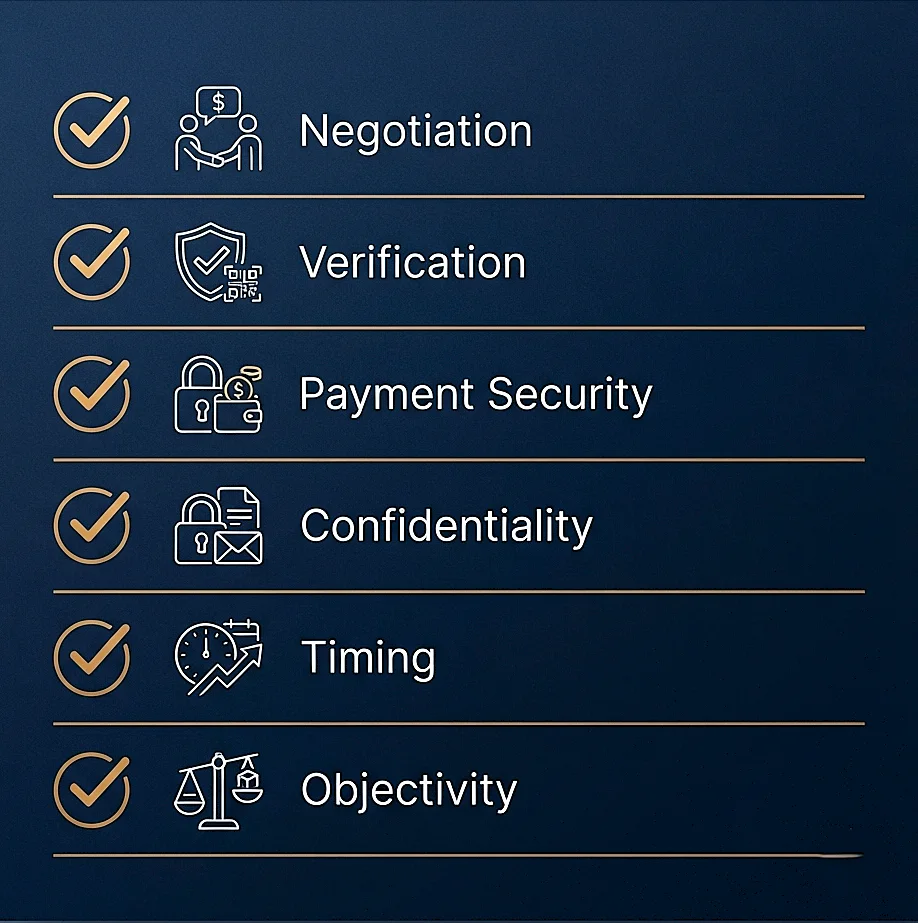
- Anchoring to the seller’s first number. Treat an opening ask as a starting point, not a fair-value assessment.
- Skipping the WHOIS check. Buyers occasionally negotiate with someone who does not actually control the domain.
- Paying outside escrow. Direct wire transfers and gift-card payments are the two most common fraud vectors in this market.
- Revealing business plans too early. Sellers who sense high commercial intent often raise their price mid-negotiation.
- Ignoring renewal and transfer lock timing. A domain close to expiration needs a faster closing timeline than one with years remaining.
- Overvaluing emotional attachment. Falling in love with one specific name removes your ability to walk away, which weakens your negotiating position.
Expert Tips to Negotiate a Premium Domain Without Overpaying
Once you understand the framework, a handful of negotiation tactics can shave a meaningful percentage off your final purchase price.
- Always counter with a range, not a single number. A range signals flexibility while still anchoring the conversation near your target price.
- Ask about the seller’s renewal date. A domain renewing soon gives you natural negotiating leverage, since the seller faces an upcoming cost regardless of the outcome.
- Bundle your offer with fast closing. Sellers frequently accept a slightly lower price in exchange for a same-week, escrow-backed close instead of a drawn-out negotiation.
- Request seller financing on larger deals. For five and six-figure domains, some sellers accept structured payments, which can lower your upfront cash requirement.
- Walk away when the math does not work. The single strongest negotiating position is a genuine willingness to leave the deal, since most premium domains have more than one interested buyer somewhere on the market.
Where Short Domain Names Fit Into Your Buying Strategy
Length is consistently one of the strongest predictors of both price and long-term brand value in the premium domain market. Six-letter names in particular sit in a sweet spot: short enough to be memorable and easy to type, yet plentiful enough to still offer meaningful choice across industries. If your buying criteria from Step 1 favor brevity, browsing a curated collection of 6 letter domain names for sale is a practical way to see current market pricing for that exact length category before you commit to an offer on any single name.
Reading a Seller’s Listing: Red Flags vs. Green Flags
Before you invest time in outreach or negotiation, the listing itself often tells you how the transaction will go. Learning to read between the lines saves you from chasing deals that were never going to close cleanly.
Green Flags Worth Pursuing
- Transparent pricing history. A seller who shares past appraisal data or prior offer ranges is signaling good faith and realistic expectations.
- Verified marketplace account. Established marketplaces typically verify seller identity, which reduces the risk of dealing with a domain that is not actually theirs to sell.
- Clean WHOIS record. Consistent registration details over several years suggest a stable, legitimate holder rather than a recently hijacked or disputed asset.
- Responsive, specific communication. Sellers who answer direct questions about renewal dates and transfer process tend to close faster and with fewer surprises.
Red Flags to Slow Down For
- Pressure to move off-platform. Any request to complete payment outside escrow, especially through wire transfer, cryptocurrency, or gift cards, is a serious warning sign.
- Vague or shifting ownership claims. If the person you are negotiating with cannot clearly explain how they acquired the domain, treat that as a reason to pause.
- Unrealistic urgency. Artificial scarcity tactics, such as claiming multiple buyers are bidding right now with no verifiable evidence, are a common pressure tactic rather than a genuine market signal.
- Recently transferred ownership with no history. A domain that changed hands only weeks ago and is already being resold at a steep markup deserves extra scrutiny.
Ultimately, the goal is to treat each listing the way you would treat a real estate listing: verify the paperwork, confirm the seller’s identity, and never let urgency override your due diligence process.
Understanding Payment Structures for Larger Purchases
Not every premium domain purchase is a simple lump-sum transaction. As the price climbs into five and six figures, buyers and sellers increasingly structure deals differently to manage risk and cash flow on both sides.
Lump-Sum Escrow Payment
This remains the standard structure for the majority of premium domain purchases. The buyer deposits the full agreed price with an escrow provider, the seller initiates the transfer, and escrow releases funds once the buyer confirms receipt. It is fast, simple, and appropriate for the vast majority of transactions under six figures.
Installment or Seller-Financed Purchases
For higher-value domains, some sellers accept a structured payment plan: an initial deposit followed by monthly or quarterly installments, often with the domain held in escrow or a lease-to-own arrangement until the balance is paid. This structure benefits buyers who want to preserve cash flow, though it typically comes with a slightly higher total price to compensate the seller for extended risk.
Lease-to-Own Agreements
Occasionally used for extremely high-value domains, a lease-to-own agreement lets a buyer use the domain commercially while making payments toward eventual ownership. This arrangement requires careful contractual language around usage rights, renewal responsibility, and what happens if payments lapse, so legal review is strongly recommended before signing.
Whichever structure you choose, insist on documentation. A one-page agreement outlining price, payment schedule, transfer conditions, and escrow terms protects both parties and prevents misunderstandings later in the process.
How Industry and Niche Affect Premium Domain Pricing
The same domain length and structure can command wildly different prices depending on the industry it serves. Recognizing these patterns helps you calibrate expectations before you start negotiating.
- Finance and fintech: Extremely competitive due to high customer lifetime value, which pushes short, trustworthy-sounding .com domains toward the top of the pricing spectrum.
- Healthcare and wellness: Strong demand for names that convey credibility and trust, since patients and consumers are cautious about unfamiliar brands.
- Technology and SaaS: Increasingly comfortable with alternative extensions like .io and .ai, which slightly reduces pressure on .com pricing compared to more traditional industries.
- Local and regional services: Generally lower pricing ceilings, since the addressable market and resale pool are smaller than in global industries.
- E-commerce and retail: Pricing tracks closely with product category search volume, so a name matching a trending product niche can command a premium even at longer lengths.
Cross-referencing your target niche against these patterns before you set a budget prevents two common errors: underestimating what a competitive-niche domain will cost, and overpaying for a name in a niche where buyer demand is genuinely limited.
Building Your Personal Domain Buying Checklist
Before you make your first offer, consolidate everything above into a simple pre-purchase checklist. Reviewing this list before every acquisition keeps the process consistent, regardless of how attractive a particular name looks.
- Confirm the domain matches your predefined length, extension, and budget criteria.
- Pull at least five comparable sales in the same length and niche category.
- Run a WHOIS lookup and note the registrar, expiration date, and lock status.
- Send a neutral, low-detail inquiry to gauge seller responsiveness.
- Negotiate using comparable data, not emotional attachment to the name.
- Insist on escrow for payment and transfer, regardless of deal size.
- Document the agreement in writing, including price and transfer timeline.
- Confirm ownership and enable registrar lock before releasing final payment.
Buyers who consistently work through this checklist rarely overpay, simply because every step forces a pause for verification instead of an emotional, rushed decision.

Featured Snippet Summary: How to Buy a Premium Domain Name in 5 Quick Steps
Quick answer: To buy a premium domain name without overpaying, research comparable sales, verify the seller’s ownership, negotiate using data instead of emotion, close through escrow, and confirm the transfer before releasing payment.
- Research comparable sales for domains of similar length and niche.
- Verify current ownership through a WHOIS lookup.
- Contact the seller and negotiate using comparable pricing data.
- Complete payment and transfer through a licensed escrow service.
- Confirm registrar ownership and enable transfer lock before escrow releases funds.
Legal and Trademark Considerations Before You Buy
Price is not the only variable that matters when acquiring a premium domain. A cheap domain that carries legal risk can end up costing far more than an expensive one that is fully clean. Building a quick legal check into your buying process protects you from disputes after the sale closes.
Check for Existing Trademarks
Before finalizing any offer, search relevant trademark databases to confirm the name is not actively protected in your target industry. Buying a domain that infringes on an existing trademark can result in a costly dispute, even if you purchased it in good faith from a third-party seller.
Review the Domain’s History
Tools that show a domain’s historical use, such as archived snapshots of previous websites, can reveal whether the name was ever associated with spam, adult content, or blacklisted activity. A domain with a troubled history can carry lingering search engine penalties even after ownership changes.
Confirm Transfer Rights in Writing
Make sure your purchase agreement, however brief, explicitly states that the seller has full legal rights to transfer the domain and that no third party holds a competing claim. This clause is standard in professional domain transactions and protects you if an ownership dispute surfaces later.
None of these checks take more than a day to complete, and skipping them is one of the few domain-buying mistakes that can cost you the asset entirely, not just money.
A Realistic Walkthrough of the Buying Process
To see the framework in action, consider a typical scenario. A founder wants a six-letter .com for a new fintech brand. They start by listing their criteria: under seven characters, .com only, no numbers or hyphens, budget capped at a specific figure.
Next, they pull comparable sales of similar six-letter fintech-adjacent .com domains sold over the past 18 months, which gives them a realistic price band rather than a guess. A WHOIS lookup confirms the domain has been held by the same owner for several years and is not close to expiration, which suggests a stable, low-risk seller.
The founder sends a short inquiry through the marketplace’s contact form, mentioning only that they are exploring the domain for a new project, without disclosing funding stage or specific business plans. When the seller responds with an asking price above the comparable range, the founder counters using the sales data directly, referencing two similar transactions by length and extension.
After two rounds of negotiation, both sides settle on a price inside the comparable range. The transaction moves through escrow, the seller initiates the transfer, and the founder confirms registrar ownership before escrow releases the final payment. Total time from first contact to completed transfer: eleven days, well within the typical window for a mid-five-figure premium domain purchase.
This walkthrough illustrates why the framework matters: at no point did the founder rely on guesswork, emotional urgency, or unverified promises. Every step was backed by data or a security mechanism, which is exactly the discipline that keeps a premium domain purchase from turning into an overpayment.
Frequently Asked Questions
How do I know if a domain name is actually premium?
A domain qualifies as premium when it combines short length, a real dictionary word or brandable structure, a .com extension, no hyphens or numbers, and demonstrated commercial search demand. If a name checks most of these boxes, it typically carries resale and branding value above a standard registration.
What is a fair price for a premium domain name?
Fair pricing depends on length, extension, keyword demand, and comparable sales. Short 4-6 letter .com domains without a clear dictionary meaning often trade between a few thousand and tens of thousands of dollars, while high-demand keyword domains can run into six or seven figures. Comparable sales data is the most reliable pricing anchor.
Is it safe to buy a domain name directly from an owner?
Yes, provided you verify ownership through WHOIS or registrar lock status and route payment and transfer through a licensed escrow service. Direct outreach is common in the premium domain market, but the transaction should never bypass escrow protection.
How long does a premium domain transfer take?
Once escrow confirms payment, a standard registrar-to-registrar transfer or marketplace push typically completes within 24 hours to 7 days, depending on the registrar’s transfer lock policies and whether an authorization code is required.
Should I use a domain broker instead of buying directly?
A broker is worth the commission when the domain is high-value, the owner is unresponsive to direct outreach, or you want to keep your identity confidential during negotiation. For smaller purchases through an established marketplace, direct negotiation is usually sufficient.
Conclusion
Learning how to buy a premium domain name without overpaying comes down to treating the purchase like any other asset acquisition: gather comparable data, verify what you are actually buying, negotiate from evidence rather than emotion, and protect the transaction with escrow from start to finish. Buyers who follow this framework consistently pay closer to fair market value, while buyers who skip straight to an offer tend to pay a premium on top of the premium.
If you are ready to put this framework into practice, start by comparing live pricing and available inventory on the and shortlist a handful of names that match your length, extension, and budget criteria before reaching out to any seller.