
Domain name WHOIS privacy explained simply: it is a proxy service that swaps a registrant’s personal contact details for a forwarding address in the public WHOIS database, without altering actual domain ownership. It does not hide who legally owns a domain from registrars, courts, or ICANN’s escrow records, and it cannot shield a buyer from UDRP disputes or trademark claims. For premium domain name buyers, understanding this distinction determines whether privacy protects them or quietly puts a six-figure asset at risk.
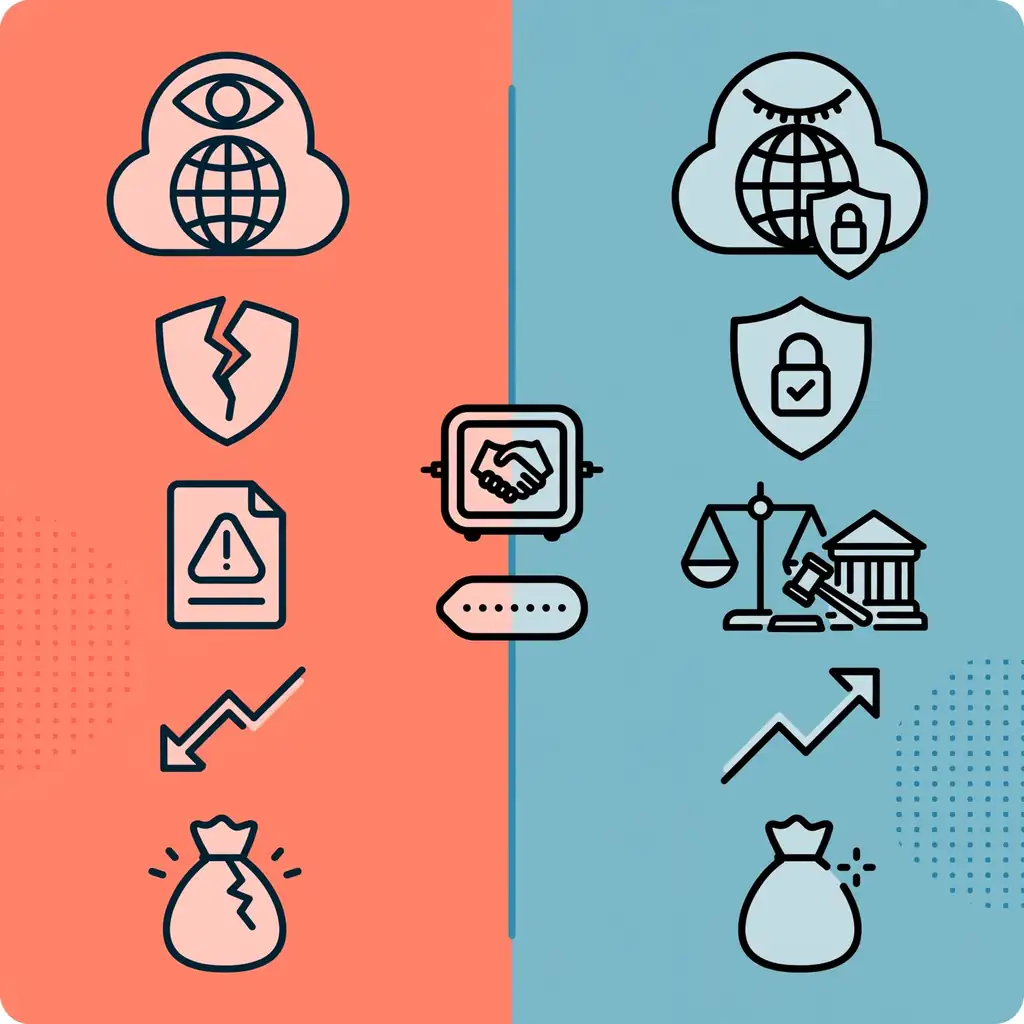
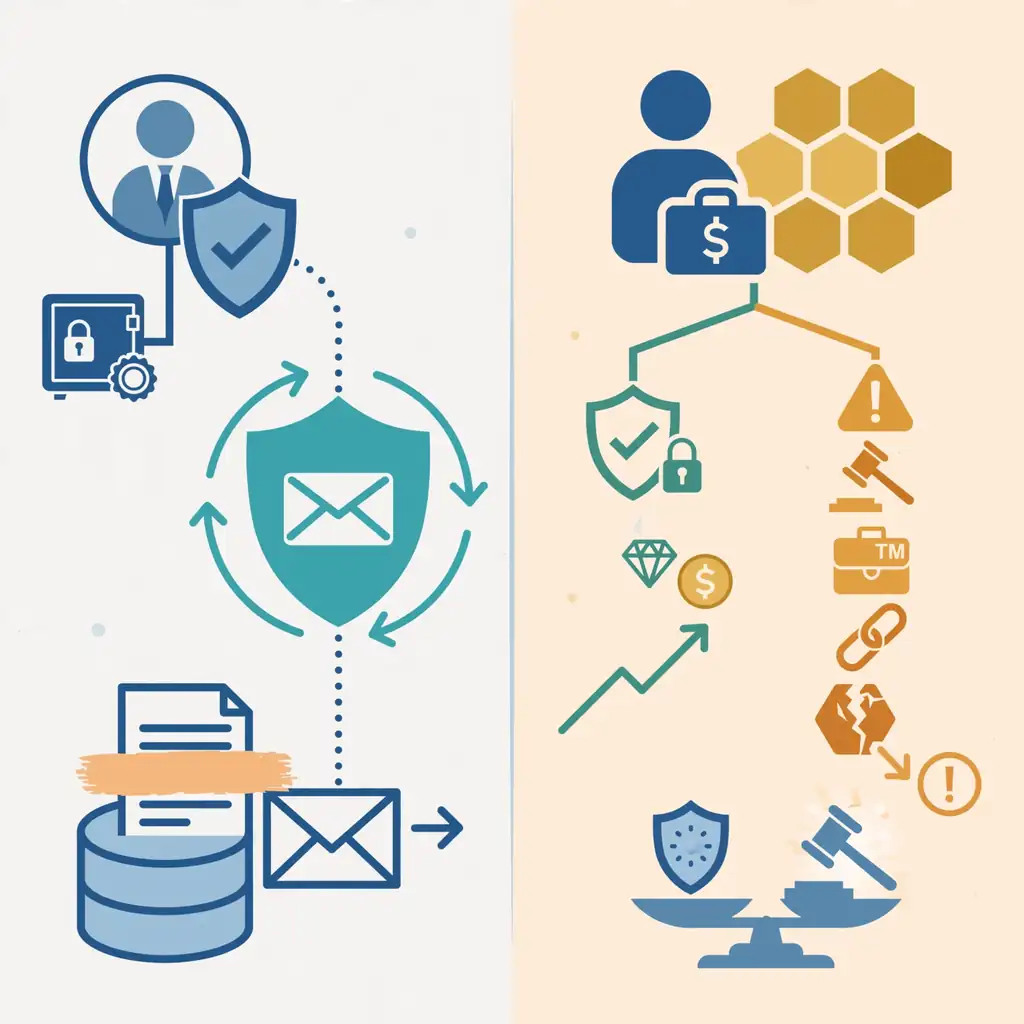
Every time someone registers a domain, ICANN’s rules require a working set of contact details to sit behind it. That single requirement has spawned an entire privacy industry, one that premium domain buyers rarely examine until a deal has already closed. If you have ever wondered why some domains show a company name in WHOIS while others show “Privacy Protected” or a redacted GDPR notice, you have already brushed up against this exact issue.
For anyone acquiring a 6 letter domain name or building a portfolio of short, brandable assets, WHOIS privacy is not a checkbox. It is a decision with real consequences for brand ownership, dispute resolution, and resale value. This guide breaks down, in plain language, what WHOIS privacy actually does, where its limits sit, and the specific scenarios where premium buyers genuinely need it.
What is WHOIS and Why Does It Exist?
WHOIS is a publicly queryable database that stores registration records for every domain name on the internet. Consequently, anyone can look up a domain and, depending on privacy settings, see who registered it, when, and through which registrar.
The system was built for a simple reason: the internet needed a way to hold domain owners accountable.
Consider these original purposes:
- Technical troubleshooting – network administrators needed to contact a domain’s owner during outages or misconfigurations.
- Legal accountability – trademark holders and law enforcement needed a way to identify who controlled a given domain.
- Trust verification – buyers and business partners could confirm a domain’s registration history before transacting.
Over time, however, WHOIS became a double-edged tool. While it supported legitimate accountability, it also exposed registrants to spam, harassment, and social engineering attacks, since anyone with an internet connection could pull a person’s name, address, email, and phone number in seconds.
This tension between transparency and protection is exactly why the privacy layer emerged. Registrars recognized that requiring full public disclosure discouraged legitimate registrants while doing little to stop bad actors, who could simply falsify their contact details anyway. Meanwhile, genuine domain owners, especially those holding valuable, easily searchable premium assets, bore the brunt of the exposure. Therefore, the industry moved toward a compromise: keep accountability intact at the registrar level, while giving registrants the option to mask their personal footprint from casual public view.
Domain Name WHOIS Privacy Explained: The Core Mechanics
At its foundation, WHOIS privacy (sometimes called WHOIS proxy or domain privacy protection) replaces a registrant’s real contact information with generic, registrar-provided placeholder data. The underlying ownership record with the registrar itself remains unchanged.
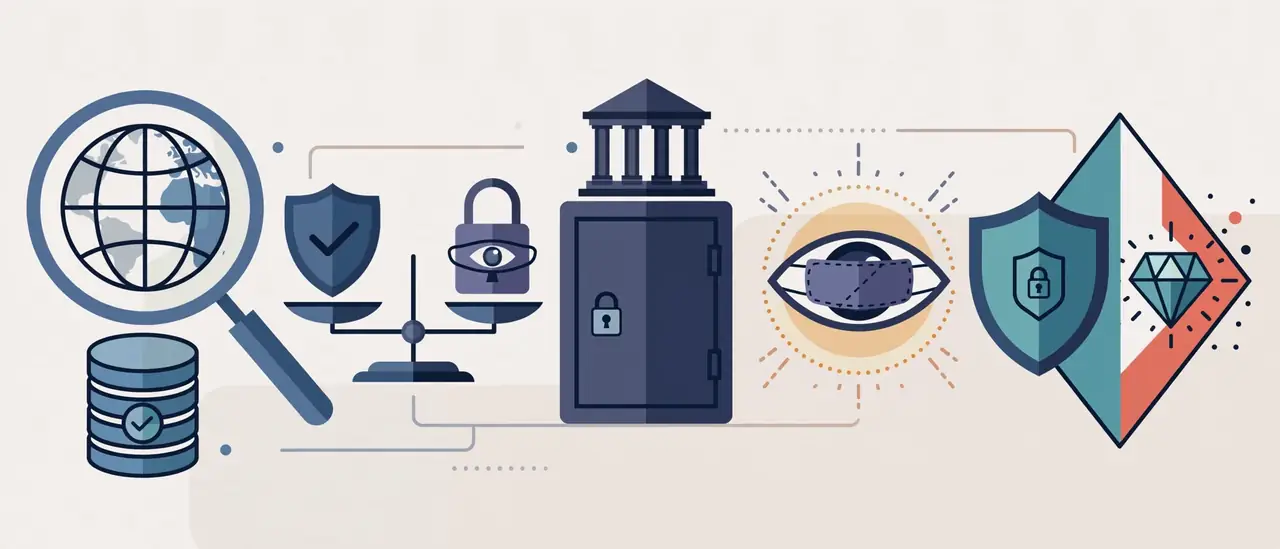
Here’s how the substitution typically works:
- The registrant purchases privacy protection, often bundled free with registration or added for a small annual fee.
- The registrar creates a proxy identity, usually a generic name paired with the registrar’s own address.
- A forwarding email address routes messages to the real owner without exposing their inbox.
- The public WHOIS record now displays the proxy details instead of the registrant’s personal information.
Because of this, anyone querying WHOIS sees the proxy, not the person. Meanwhile, the registrar retains the real ownership data internally, since ICANN requires every registrar to keep accurate records regardless of what the public sees.
How GDPR Changed the WHOIS Landscape
In 2018, the EU’s General Data Protection Regulation forced a global shift in how WHOIS data gets displayed. As a result, most registrars now redact personal information by default for all domains, not just those with paid privacy add-ons, unless the registrant is a verified business entity in certain jurisdictions.
This shift means that today, a domain showing redacted WHOIS data isn’t necessarily using a paid privacy service. It might simply reflect default GDPR-compliant masking. That distinction matters enormously for buyers evaluating a premium domain’s legitimacy, since redacted data no longer automatically signals privacy protection versus standard compliance.
What WHOIS Privacy Actually Hides
To use this protection wisely, buyers need a precise list of what it genuinely conceals from public view. Broadly speaking, privacy protection hides:
- Registrant’s personal name – replaced with a proxy or registrar-generated identifier.
- Home or business address – substituted with the registrar’s forwarding address.
- Direct phone number – hidden behind a proxy contact line.
- Personal email address – swapped for a forwarding alias that routes to the real inbox.
- Administrative and technical contact details – often masked alongside the registrant contact.
Because these fields disappear from public view, casual lookups, scrapers, and spam bots cannot harvest a registrant’s identity simply by querying a domain. This is precisely why privacy protection became standard practice across the domain industry: it closes off the easiest vector for unsolicited outreach and data harvesting.
What WHOIS Privacy Doesn’t Hide (And Never Will)
This is where many buyers, especially those new to premium domains, misunderstand the protection’s scope. WHOIS privacy is a display-layer mask, not a legal shield. Specifically, it cannot conceal:
1. True Ownership From the Registrar

Registrars are contractually bound by ICANN’s Registrar Accreditation Agreement to maintain accurate, verifiable ownership records internally. Therefore, even a fully privacy-protected domain has a real owner on file, one that the registrar can and must produce under valid legal process.
2. Ownership in Escrow or Transfer Transactions

When a premium domain changes hands through an escrow service, the real registrant identity must be verified before funds release. Privacy protection has zero bearing on this step, since escrow providers work directly with registrar-verified ownership data, not the public WHOIS display.
3. Identity During UDRP or Legal Disputes

If a trademark holder files a Uniform Domain-Name Dispute-Resolution Policy (UDRP) complaint, the arbitration body can compel the registrar to disclose the actual registrant. In other words, privacy protection offers no defense in a legitimate dispute; it merely delays discovery by a procedural step.
4. Domain Value or Brandability Signals

Some buyers mistakenly assume a privacy-protected domain looks less trustworthy to prospective buyers. In practice, privacy status has no bearing on a domain’s appraised value, since valuation depends on factors like length, brandability, and search demand rather than WHOIS visibility.
5. Law Enforcement Access

Court orders, subpoenas, and formal law enforcement requests bypass privacy protection entirely. Registrars maintain compliance teams specifically to handle these disclosure requests.
Quick Answer: WHOIS privacy hides a registrant’s personal contact details from public lookups, but it never hides true ownership from registrars, courts, escrow services, or UDRP panels.
WHOIS Privacy vs. Standard Public Registration: A Comparison
Understanding the practical trade-offs helps buyers decide which approach fits a given acquisition strategy.
| Factor | WHOIS Privacy Enabled | Public WHOIS (No Privacy) |
|---|---|---|
| Personal contact exposure | Hidden behind proxy details | Fully visible to anyone |
| Spam and unsolicited outreach | Significantly reduced | High, especially for premium domains |
| Legal ownership record | Unchanged, held by registrar | Unchanged, held by registrar |
| UDRP/dispute protection | None | None |
| Buyer trust signal for brokered sales | Neutral in most cases | Neutral in most cases |
| Transfer/escrow process | Identical process | Identical process |
| Cost | Often free; sometimes $2-$15/year | No additional cost |
| Best suited for | Individual buyers, brand-sensitive purchases | Businesses wanting transparent public registration |
As the table shows, privacy protection changes visibility, not legal reality. Buyers who understand this distinction can make an informed choice rather than assuming privacy equals anonymity.
When Premium Domain Buyers Genuinely Need WHOIS Privacy
Not every acquisition calls for privacy protection, yet certain scenarios make it close to essential. Below are the situations where enabling it delivers real, practical benefit.
You’re Assembling a Portfolio Before a Public Launch

If you are quietly acquiring several six-letter, all-consonant domains for a stealth startup, public WHOIS records can tip off competitors to your naming strategy before launch. Privacy protection keeps that acquisition pattern out of casual view.
You’re Negotiating a High-Value Purchase Anonymously

Sellers and brokers often price premium domains differently once they identify a buyer as a well-funded company versus an individual. Because of this, many buyers use privacy-protected shell registrations or brokers specifically to avoid tipping their hand during negotiations, an approach closely tied to how the domain aftermarket functions.
You Want to Reduce Harassment and Social Engineering Risk

Premium domains attract attention, some of it unwanted. Publicly listed registrant emails and phone numbers become prime targets for phishing attempts designed to trick owners into transferring domains through fraudulent “urgent renewal” or “ownership verification” messages.
You’re a Solo Founder or Individual Investor

Unlike registered businesses, individual buyers rarely want their home address permanently searchable through a domain lookup. Consequently, privacy protection is particularly valuable for solo entrepreneurs and independent investors who register domains under a personal name.
You’re Testing a Brand Name Before Committing Publicly

Startups frequently register several candidate names while finalizing branding decisions, an approach discussed in more depth in domain name strategy for AI startups. Privacy protection keeps these exploratory registrations from broadcasting unreleased product direction.
When You Might Skip WHOIS Privacy
On the other hand, some buyers deliberately choose public WHOIS records, and doing so isn’t a mistake. Consider skipping privacy protection when:
- You are registering under a verified corporate entity that wants transparent, public ownership for trust purposes.
- You are building a domain brokerage or marketplace reputation where public ownership history adds credibility.
- Your jurisdiction’s registry doesn’t offer privacy options for certain top-level domains (some ccTLDs restrict or ban WHOIS privacy entirely).
- You want potential buyers to contact you directly without navigating a proxy relay, which can sometimes slow down inbound acquisition offers.
Common Mistakes Buyers Make With WHOIS Privacy
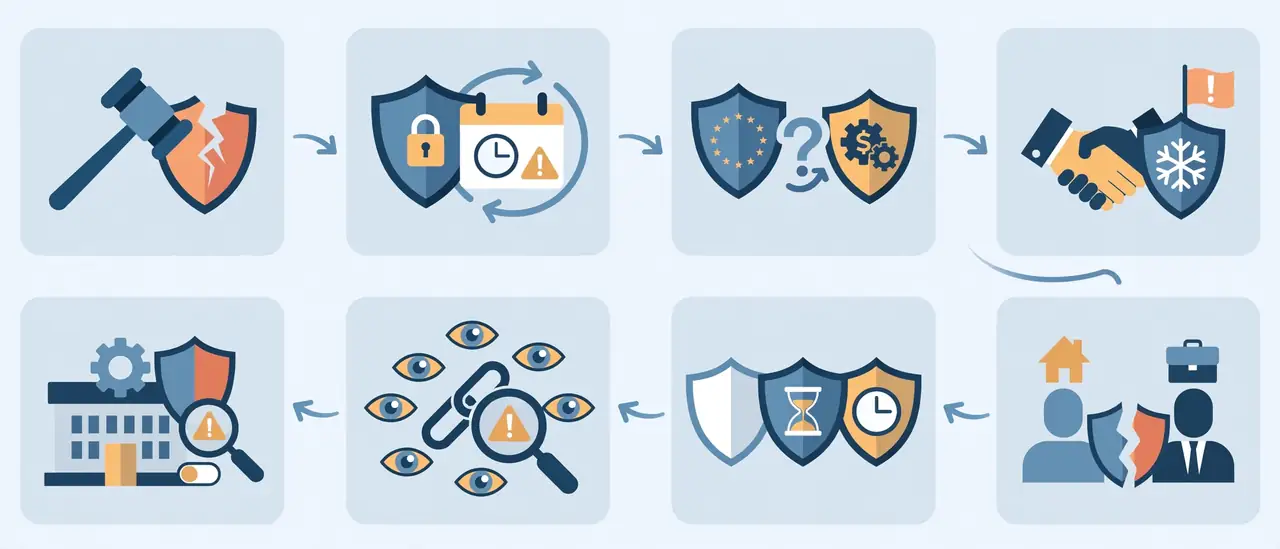
Even experienced buyers stumble into avoidable errors. Here are the mistakes that come up most often during premium domain transactions.
- Assuming privacy protects against UDRP complaints. It doesn’t. Arbitration panels can and do compel disclosure.
- Forgetting to re-enable privacy after a domain transfer. Many registrars automatically disable privacy for 60 days following an ownership change, per ICANN transfer policy, leaving personal data exposed during a vulnerable window.
- Confusing GDPR-default redaction with paid privacy protection. These are not the same thing, and conflating them can lead to false assumptions about who actually controls a domain.
- Using privacy to obscure ownership during a sale, then getting flagged for suspicious activity. Registrars sometimes freeze transfers when ownership patterns look evasive, so transparency during the actual transfer step still matters.
- Overlooking that privacy status can be toggled by registrars during compliance reviews. If a registrar suspects abuse, they can strip privacy protection unilaterally to investigate.
- Ignoring how domain length and structure affect scrutiny. Shorter, more valuable domains draw more WHOIS lookups overall, which is one more reason domain length matters for brand success beyond pure brandability.
- Assuming every registrar’s privacy service works identically. Some proxy providers respond to disclosure requests faster than others, and some retain forwarded messages longer. Reading the specific privacy provider’s terms avoids unpleasant surprises later.
- Failing to separate personal and business registrations. Buyers who register both personal projects and client-facing business domains under the same account sometimes apply privacy settings inconsistently, leaving one category exposed while the other stays protected.
Expert Tips for Managing WHOIS Privacy on Premium Assets
Drawing from how experienced domain investors handle their portfolios, here are practical habits worth adopting.
- Audit your WHOIS records quarterly. Registrar policies change, and a domain you registered with privacy enabled two years ago might have quietly reverted after a renewal or transfer.
- Keep proxy email forwarding active and monitored. A neglected proxy inbox means missed renewal notices, missed acquisition offers, and, in worst cases, missed dispute notifications.
- Use business entity registration for domains tied to active ventures. This keeps personal data separate from company assets while still allowing appropriate transparency.
- Document your true ownership records independently. Don’t rely solely on registrar records; keep your own paper trail of purchase agreements, especially for high-value acquisitions, which supports smoother appraisals later, as outlined in guidance on how domain names are valued.
- Understand your registrar’s specific privacy provider. Some registrars use in-house proxy services; others partner with third parties. Read the terms, since data-handling practices vary.
- Never assume privacy alone prevents overpaying or underpaying in a negotiation. Pricing strategy still depends on comparable sales data and appraisal fundamentals, not WHOIS visibility, a distinction worth reviewing alongside tips on buying a premium domain without overpaying.
- Pair privacy protection with a dedicated acquisition email. Rather than routing forwarded WHOIS messages to a personal inbox, many experienced investors set up a separate address exclusively for domain-related correspondence. This makes it far easier to spot genuine offers amid the inevitable background noise of automated renewal spam and low-quality solicitation attempts.
- Revisit your privacy provider’s data retention policy annually. Providers occasionally update how long they store forwarded correspondence or proxy contact logs, and staying current on these changes helps buyers make informed decisions about which registrar to consolidate their portfolio with over time.
Step-by-Step: How to Enable WHOIS Privacy on a Premium Domain
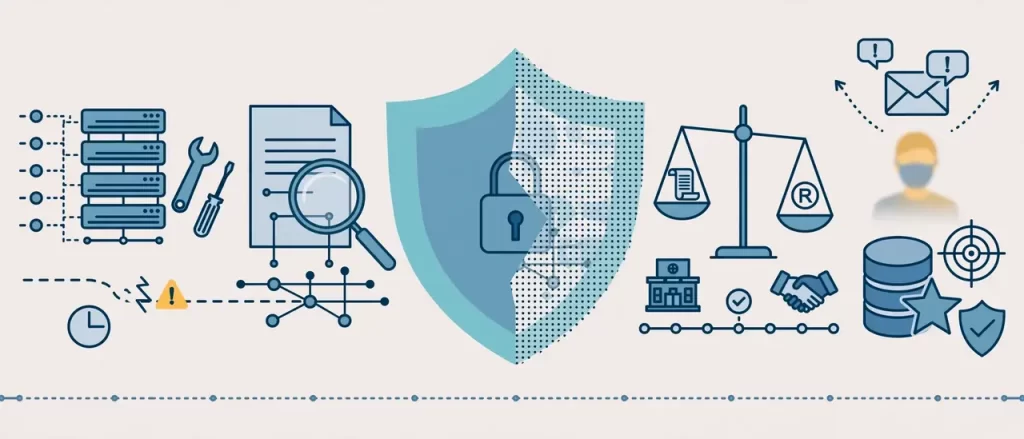
For buyers setting up privacy protection for the first time, the process is fairly consistent across major registrars.
- Log into your registrar account and navigate to the domain management dashboard.
- Locate the privacy or “ID Protection” setting, usually found under domain-specific settings or bulk management tools.
- Enable the privacy toggle for the specific domain, or apply it in bulk across your portfolio.
- Verify the forwarding email address is active and monitored, since this is how legitimate inquiries and renewal notices reach you.
- Confirm the WHOIS record has updated by running a public lookup 24-48 hours after enabling protection, since propagation isn’t always instant.
- Re-check privacy status after any transfer or ownership change, given that many registrars temporarily disable it during the mandatory post-transfer lock period.
WHOIS Privacy and Brand Identity: A Deeper Connection
There’s a strategic dimension to this decision that goes beyond spam prevention. The way a domain’s ownership is presented, or concealed, can subtly shape early brand perception among partners, investors, and potential acquirers. A domain tied to a clearly named, credible entity can reinforce legitimacy, while an anonymized record might raise questions during due diligence for larger deals.
This is closely tied to broader questions of how a domain name shapes brand identity, since ownership transparency is one small but real thread in that larger fabric. Buyers acquiring domains as long-term brand assets, rather than short-term flips, should weigh this factor alongside the purely defensive benefits of privacy protection.
A Real-World Scenario: How This Plays Out in Practice
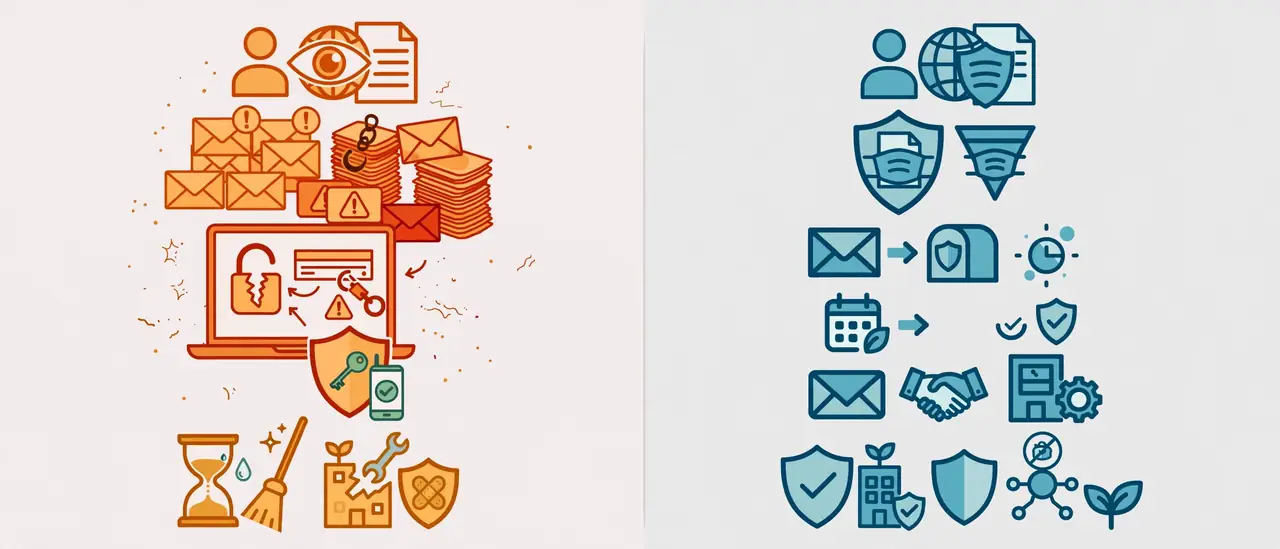
To make this concrete, imagine two buyers acquiring the same category of asset within a week of each other.
Buyer A purchases a five-figure, six-letter domain under their personal name and leaves WHOIS visible. Within days, their inbox fills with fake “urgent transfer confirmation” emails designed to look like registrar notices. One nearly succeeds in tricking them into entering login credentials on a spoofed page. Fortunately, two-factor authentication stops the hijack attempt, but the stress and cleanup consume hours that could have gone toward actually building the brand.
Buyer B acquires a comparable domain the same week, immediately enables WHOIS privacy, and sets up a monitored forwarding email. Consequently, their public record shows only proxy details. When a legitimate acquisition offer arrives six months later from a company wanting the domain for a product launch, it still reaches Buyer B through the forwarding address, since the privacy layer doesn’t block genuine outreach, only casual scraping and automated harvesting.
Neither buyer’s underlying ownership changed based on privacy status. However, the practical, day-to-day experience of owning a premium domain differed considerably, illustrating why this decision deserves more thought than a quick default toggle.
How Registrars and Marketplaces Handle Privacy During a Sale
Because premium domain transactions often move through brokers, marketplaces, or escrow platforms rather than direct registrar transfers, it’s worth understanding how privacy settings interact with the sale process itself.
- Escrow platforms verify true ownership internally, regardless of what the public WHOIS record displays, meaning privacy status never delays or complicates a legitimate escrow-based transfer.
- Marketplaces typically don’t require sellers to disable privacy before listing a domain, since buyer trust is usually established through the marketplace’s own verification systems rather than public WHOIS lookups.
- Post-sale, registrars commonly impose a 60-day transfer lock during which privacy settings may be temporarily altered or reset, per standard ICANN transfer policy, so new owners should double-check their privacy status once that window closes.
- Some registrars require privacy to be temporarily disabled during specific verification steps, such as confirming registrant identity for a bulk portfolio transfer, though this is typically brief and automatically reversible.
Understanding these mechanics ahead of time prevents unnecessary panic if a privacy setting appears to shift mid-transaction. In nearly every case, it reflects standard procedural handling rather than any actual security issue.
WHOIS Privacy for International and Multi-Jurisdiction Buyers
Buyers operating across borders face an additional layer of complexity worth flagging separately. Because domain registries are governed regionally in some cases, and globally through ICANN in others, privacy rules aren’t perfectly uniform worldwide.
Consider these jurisdictional nuances:
- EU-based registrants benefit from GDPR’s baseline redaction regardless of whether they pay for dedicated privacy protection, though this default redaction is narrower in scope than a full proxy service.
- US-based registrants generally rely on opt-in privacy services offered by their registrar, since the US doesn’t mandate blanket WHOIS redaction the way GDPR does within the EU.
- Certain ccTLD registries, particularly in jurisdictions with strict local presence requirements, may prohibit privacy protection entirely or require a locally licensed proxy provider instead of a standard registrar-based service.
- Cross-border business buyers should confirm which jurisdiction’s rules apply to a given domain before assuming standard privacy protection will function identically across their entire portfolio.
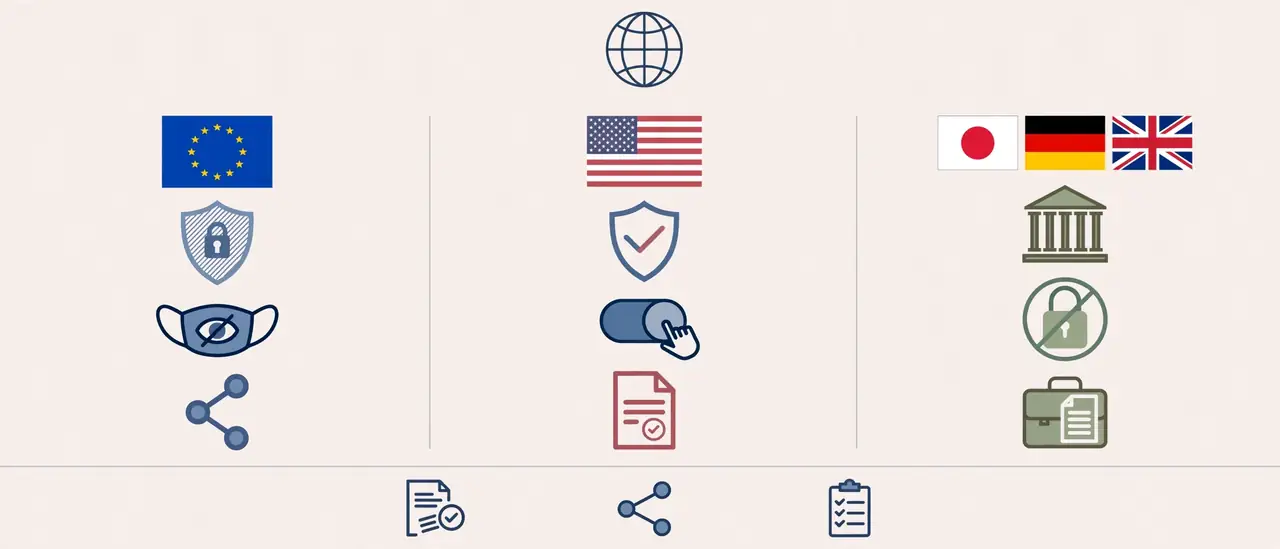
This matters particularly for buyers building international brand portfolios, where a single naming strategy might span domains registered under several different national registries, each with its own privacy framework.
For portfolio-level buyers specifically, it’s worth building a simple internal reference sheet tracking which registries allow privacy, which enforce mandatory disclosure, and which fall somewhere in between. Doing so up front prevents the common scenario where a buyer assumes uniform protection across a multi-domain acquisition, only to discover mid-negotiation that one specific ccTLD in the portfolio has always displayed full registrant details publicly, regardless of any privacy toggle applied at the registrar level.
Industry Standards and Authoritative References
For buyers who want to verify these mechanics directly rather than take a third party’s word for it, ICANN maintains public documentation on WHOIS policy and registrant data requirements, including how registrars must handle privacy and proxy services under current accreditation rules. Similarly, the Internet Corporation for Assigned Names and Numbers publishes its Temporary Specification for gTLD Registration Data, which governs how GDPR intersects with public WHOIS access. Buyers dealing with EU-based registrants or entities should also review the European Commission’s official GDPR guidance, since it directly informs how registrars across the industry redact personal data by default.
Frequently Asked Questions
Does WHOIS privacy protect a domain from being stolen?
No. WHOIS privacy conceals contact information, but it does nothing to prevent domain hijacking. Account security measures like two-factor authentication, registrar transfer locks, and strong passwords are what actually protect against theft.
Is domain name WHOIS privacy explained differently for ccTLDs versus gTLDs?
Yes, in practice. Generic top-level domains (.com, .net, .org) generally support privacy protection uniformly across accredited registrars. Country-code domains (like .de or .ca), however, often have their own registry rules, and some ccTLDs restrict or entirely prohibit WHOIS privacy for registrants within that country.
Can I add WHOIS privacy after I’ve already registered a domain publicly?
Yes. Most registrars allow privacy protection to be toggled on at any time after registration, typically at no cost or for a small annual fee. It’s a straightforward setting change rather than a re-registration process.
Does WHOIS privacy affect SEO or search rankings?
No. Search engines do not factor WHOIS visibility into ranking algorithms. Domain authority, content quality, and backlink profiles remain the relevant ranking signals, unrelated to registrant privacy settings.
Will WHOIS privacy hide my domain from potential buyers who want to make an offer?
Not entirely. Reputable privacy services still route inbound messages through a forwarding email, so legitimate purchase inquiries typically reach the real owner. That said, some buyers prefer domains with visible contact details for faster, more direct outreach.
Is WHOIS privacy included free with premium domain purchases?
It depends on the registrar and marketplace. Some include it at no extra charge, while others bundle it as a paid add-on, often priced between $2 and $15 annually. Always confirm the specific terms before finalizing a transfer.
Can a registrar remove my WHOIS privacy without my permission?
Yes, under specific circumstances. Registrars can suspend or remove privacy protection during abuse investigations, verified law enforcement requests, or mandatory post-transfer lock periods. This is written into standard ICANN accreditation agreements, so it’s a contractual safeguard rather than an arbitrary registrar decision.
Does WHOIS privacy make a premium domain harder to resell later?
Generally, no. Serious buyers evaluate a domain based on brandability, length, search volume, and comparable sales data rather than its WHOIS privacy status. That said, keeping your forwarding email actively monitored ensures you don’t miss genuine resale inquiries that route through the proxy contact.
Conclusion
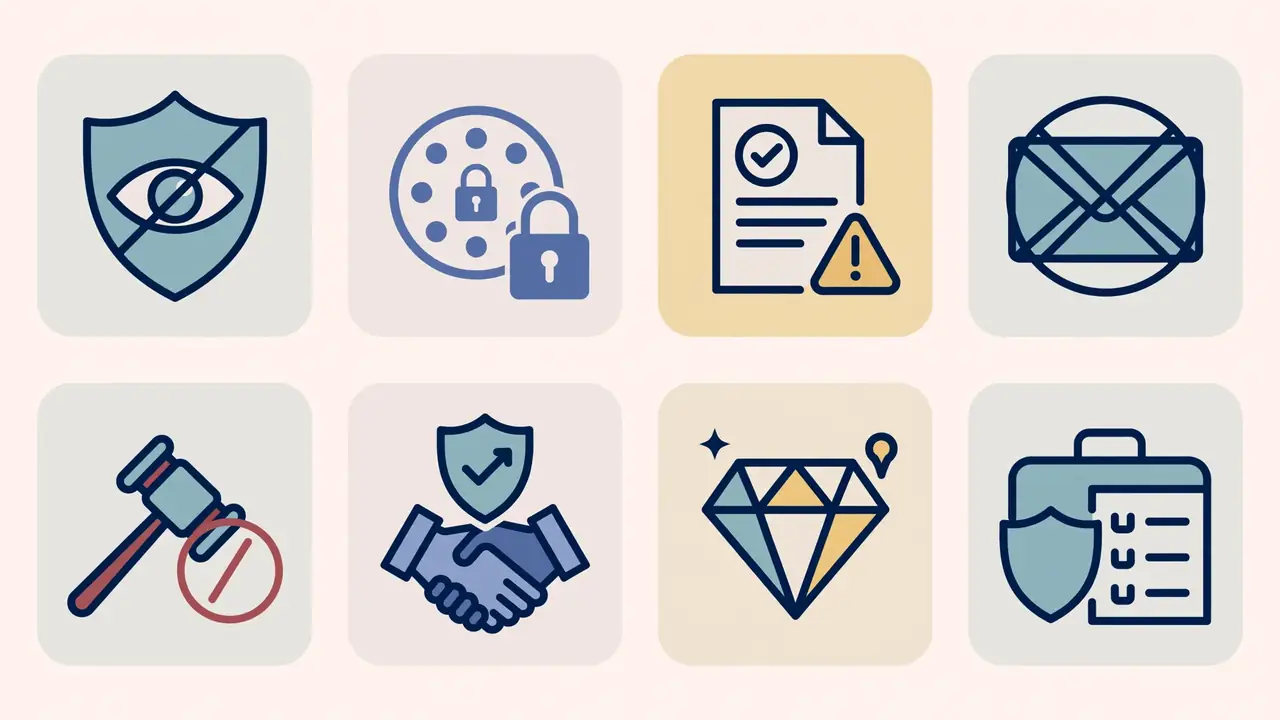
Ultimately, domain name WHOIS privacy explained in full context comes down to one core truth: it manages visibility, not legal ownership. Buyers who internalize that distinction early tend to make calmer, more informed decisions throughout the acquisition process, rather than treating privacy settings as a substitute for proper legal and financial diligence. It shields registrants from spam, harassment, and unwanted data harvesting, yet it offers no protection against UDRP disputes, court orders, or verified escrow transfers. For buyers acquiring premium domains as long-term brand or investment assets, the smartest approach is treating privacy as one tool among several, not a substitute for proper documentation, secure account practices, and informed valuation research.
Ready to put this knowledge into practice? Explore LRDEN’s curated portfolio of premium 6 letter domain names and find a brandable asset backed by transparent, professionally managed acquisition support.