
LLLLLL domain names explained simply: an LLLLLL domain is a six-character .com string composed entirely of consonants, with no vowels and no numbers, making it one of the rarest structural categories in the domain aftermarket. Because English words almost never form without a vowel, these strings read as pure brandable codes rather than dictionary terms, which is exactly why naming agencies and startups chase them for logos, app names, and ticker-style identities. This scarcity, combined with the six-letter length that keeps pronunciation and typing manageable, is what anchors their appraisal value and resale potential.
Domain buyers rarely ask about letter patterns until they stumble onto a listing like “KRDVX.com” and wonder why it costs more than a plain dictionary word. Once you understand the mechanics behind consonant-only strings, the pricing starts to make sense, and so does the branding logic that companies like Twitch, Fitbit, and Sphinx (informally) have leaned on for years. This guide breaks down the structural, linguistic, and financial case for LLLLLL domains, using the technical vocabulary that appraisers, brand strategists, and domain investors actually use, so you can walk into your next domain acquisition with a clear framework instead of guesswork.
If you’re browsing 6 letter domain names for sale, understanding this category will change how you filter listings entirely.
What Does “LLLLLL” Mean in Domain Terminology?
In domain-industry shorthand, letter-pattern codes describe the exact composition of a string using two symbols:

- L = a letter (consonant, in this context)
- V = a vowel
- N = a number
So “LLLLLL” simply means six letters, zero vowels, zero numbers. Compare that to a pattern like “LVLVLV” (alternating consonant-vowel, common in brandable names like “Kodak”-style structures) or “LLLLNN” (four letters plus two digits, common in short-domain investing circles).
Appraisers and marketplaces use this notation because it lets them classify inventory instantly. A buyer searching for pronounceable, vowel-free strings can filter by LLLLLL without manually checking spelling. It’s the same logic used for LLLL.com (four-letter) or LLLLL.com (five-letter) domains, just extended to six characters.
Why the All-Consonant Structure Matters

An all-consonant string is structurally rare because human language, English included, relies on vowels to create pronounceable syllables. When a six-letter sequence has none, it automatically:
- Reads as an invented or coined term rather than an existing word
- Avoids collision with common dictionary domains
- Creates a distinct, ownable visual and phonetic identity
- Signals “brand” rather than “generic descriptor” to the average visitor
This is precisely why the pattern shows up so often in naming strategies for tech startups, where founders want something that trademarks cleanly and doesn’t compete with an existing category term.
A Brief History of Letter-Pattern Domain Trading

Letter-pattern classification didn’t start with six-letter strings. Domain investors first standardized this notation decades ago to trade four-letter “.com” acronym domains, since businesses across banking, logistics, and manufacturing regularly needed short codes for internal systems and stock-style tickers. As four-letter inventory dried up, attention shifted to five-letter strings, then six-letter combinations, following the same demand curve.
What changed with the six-letter tier is the buyer profile. Four-letter domains were bought almost exclusively by corporations wanting acronym matches; six-letter LLLLLL domains attract a broader mix of startup founders, branding agencies, and app developers who want something short, novel, and legally clean, without needing it to match an existing acronym. That shift in buyer intent is part of why appraisal models for this tier look different from older four-letter pricing models.
How This Differs From Random Brandable Names

It’s worth separating LLLLLL domains from the broader “brandable domain” category, since the two overlap but aren’t identical. A brandable name like “Fenlo” or “Quovex” often includes a vowel and is designed from the ground up to sound like a word. An LLLLLL domain, by definition, has zero vowels, which makes it a stricter subset. Not every brandable name qualifies as LLLLLL, but every strong LLLLLL string is, by nature, brandable in the coined-word sense.
This distinction matters when you’re searching marketplaces, because “brandable” search filters will surface far more results than a strict LLLLLL filter, and the two won’t always overlap the way you’d expect.
The Branding Case for LLLLLL Domains
1. Trademark Clearance Is Easier
Because these strings rarely match existing words, trademark searches tend to come back cleaner. A generic term like “cloudstore.com” might collide with dozens of existing marks; a coined string like “BRXLTN.com” is far less likely to. This lowers legal risk during the brand registration process, which is a factor how your domain name shapes brand identity explores in more depth.
2. Memorability Through Distinctiveness
Marketing research on brand recall consistently shows that unusual, distinctive names are remembered better than descriptive ones, provided they’re short enough to retain. Six letters sits right at the edge of that retention sweet spot; long enough to feel like a real word, short enough to type without friction.
3. Global Pronunciation Flexibility
Oddly, an all-consonant string can be pronounced differently across languages without losing its identity. Since there’s no vowel-based “correct” pronunciation baked in, companies expanding internationally often find these names adapt more gracefully across markets than an English-rooted word would.
4. Visual Logo Potential
Design agencies frequently favor consonant clusters because the resulting wordmark has a strong geometric rhythm, useful for logotypes, app icons, and monogram treatments. A string like “MRKZDN” gives type designers more angular variety to work with than a vowel-heavy word.
SEO and Domain Authority Considerations
A frequent question from buyers weighing a coined LLLLLL string against a keyword-rich domain is whether the switch hurts search visibility. Modern search algorithms, per Google’s own published webmaster guidelines, place far more weight on content quality, site structure, and demonstrated expertise than on whether a domain string literally contains the target keyword. This means a well-built site on an LLLLLL domain can rank competitively, provided the content itself is authoritative, original, and genuinely useful.
That said, keyword-free domains do lose one minor advantage: the small, secondary signal some users get from seeing a relevant word in a search results URL. For brand-focused businesses building long-term equity, that trade-off is generally worth it, since a distinctive, memorable domain compounds in brand value over years, while the keyword-in-URL signal has diminished steadily in importance across recent algorithm updates.

The Investment Case: Why LLLLLL Domains Hold Value
Scarcity by the Numbers
Six-letter, all-consonant .com domains are mathematically finite and shrinking in available inventory. With 21 consonants in English, the theoretical combination count for six-letter strings is large, but the pronounceable and brandable subset is much smaller once you filter out awkward consonant clusters that are hard to say aloud (think “ZQXHRT” versus “BRXNTL”).
That smaller usable subset is what actually trades hands, and it’s why professional appraisers weigh pronounceability heavily, a factor detailed further in how domain names are valued: factors professional appraisers weigh.
Comparison: LLLLLL vs. Other Short Domain Categories
| Domain Pattern | Example Structure | Typical Buyer | Relative Rarity | Common Use Case |
|---|---|---|---|---|
| LLLL.com | 4-letter, no vowels | Investors, acronym brands | Extremely rare | Corporate initials, holding companies |
| LLLLL.com | 5-letter, no vowels | Startups, app brands | Very rare | App names, product lines |
| LLLLLL.com | 6-letter, no vowels | Startups, agencies, investors | Rare | Brandable startups, SaaS tools |
| LVLVLV.com | Alternating, pronounceable | General brands | Moderately available | Consumer products |
| Dictionary word .com | Real English word | E-commerce, content sites | Scarce for popular terms | Descriptive branding |
Resale Dynamics in the LLLLLL Category
Resale value for this category behaves differently than for descriptive keyword domains. A keyword domain’s value is closely tied to search volume and commercial intent for that specific phrase; a coined LLLLLL string has no inherent search volume of its own. Instead, its value comes from a combination of:
- How easily a buyer can imagine building a brand around it
- Whether it’s already been used successfully by a known company or product, which can validate the pattern
- How many comparable strings have sold recently, and at what price points
- Whether major marketplaces are actively listing similar structures, which signals sustained demand
Because of this, professional investors in the LLLLLL space often hold inventory for longer horizons than keyword-domain investors, treating it closer to a venture-style bet on future startup naming trends than a short-term flip.
Quick Answer: Are LLLLLL Domains a Good Investment?
Yes, when the string is pronounceable, short, and free of negative connotations in major languages. Investment-grade LLLLLL domains typically share these traits:
- No awkward consonant collisions (avoid triple-consonant tongue-twisters)
- No accidental negative meaning in major world languages
- A rhythm that could plausibly be a startup name
- Clean trademark and search history

How LLLLLL Domains Are Typically Acquired
For buyers new to this category, acquisition usually follows a predictable path:
- Identify candidate strings through marketplace filters or brainstorming tools.
- Run linguistic checks across major languages to rule out embarrassing meanings.
- Check trademark databases to confirm the string isn’t already registered in your target industry.
- Verify domain history using WHOIS and archive tools to check for prior spam use or penalties.
- Negotiate or purchase through a marketplace or broker, comparing asking price against appraisal benchmarks.
- Secure the domain and set up DNS, redirects, or a landing page promptly to establish use.
This process overlaps closely with general premium domain buying discipline, covered step-by-step in how to buy a premium domain name without overpaying.
Real-World Naming Patterns That Echo the LLLLLL Structure
Looking at how established brands have approached consonant-heavy naming offers a useful reference point, even when the examples aren’t strict six-letter, zero-vowel matches. Several well-known technology and consumer brands lean heavily on tight consonant clusters or minimal vowel usage to achieve a similarly distinctive effect:
- Short, punchy tech names in the SaaS space frequently trim vowels deliberately during the naming process, precisely because it shortens the string and increases the odds of an available domain.
- Fintech and crypto brands have gravitated toward invented, consonant-forward names over the past decade, partly to avoid regulatory-sounding or overly descriptive terms that could invite unwanted scrutiny.
- Consumer app names often start as a full word and get vowels stripped during the branding process specifically to create a distinctive, ownable domain, which is effectively how many LLLLLL-adjacent brand names come into existence in the first place.
The throughline across all three examples is the same motivation driving LLLLLL domain buyers today: vowel-light or vowel-free strings solve the domain availability problem while simultaneously creating a name that feels manufactured, modern, and ownable rather than borrowed from the dictionary.
What This Means for New Brand Naming Projects
If you’re running a naming project for a new company or product line, the LLLLLL category is worth treating as a dedicated shortlist bucket rather than an afterthought. Brand strategists typically generate hundreds of candidate names during a naming sprint, then filter for domain availability near the end of the process, often too late to catch a truly rare structural pattern. Flipping that order, starting with available LLLLLL inventory and then testing candidates for brand fit, can surface options a purely creative brainstorm would never produce.
Common Mistakes Buyers Make With LLLLLL Domains
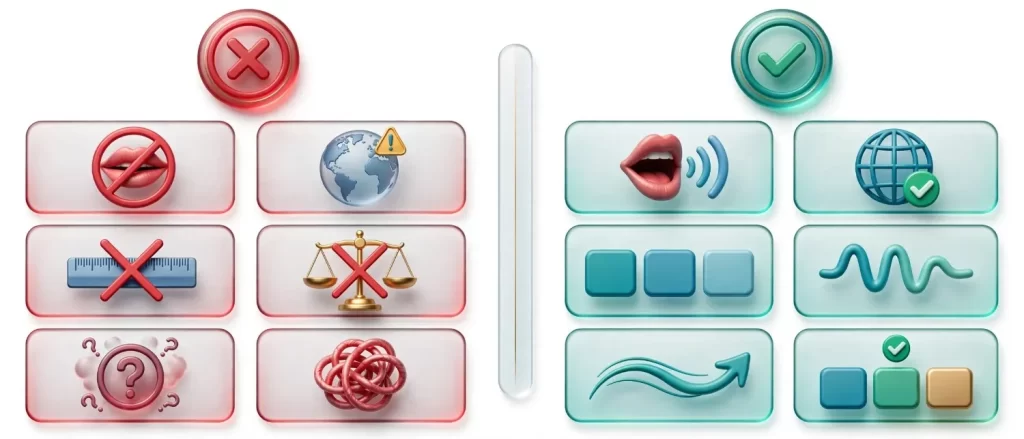
Even experienced buyers stumble on a few recurring issues:
Mistake 1: Ignoring pronounceability.
A string that looks rare on paper but can’t be said aloud comfortably will struggle as a spoken brand name, especially for radio, podcasts, or voice search.
Mistake 2: Skipping multilingual checks.
A perfectly clean English string can carry an unfortunate meaning in Spanish, German, or another major market language.
Mistake 3: Overpaying based on length alone.
Length is one input, not the whole formula; letter quality, brandability, and search volume for similar strings matter just as much.
Mistake 4: Neglecting trademark research.
Assuming a coined word is automatically safe to register as a trademark is a costly assumption to get wrong.
Mistake 5: Buying without a use case.
Domains bought purely speculatively, with no branding thesis, tend to sit unused and lose momentum in resale conversations.
A Deeper Look at the Pronounceability Problem
Pronounceability deserves its own extended discussion because it’s the single biggest factor separating a valuable LLLLLL domain from an unusable one. Linguists studying consonant clusters point out that certain consonant pairings are naturally easier for the human mouth to transition between, while others require an awkward pause or an inserted vowel sound just to say aloud.
Practically, this means buyers should test candidate strings against a simple mental rule: can the string be broken into two roughly equal three-letter halves that each resemble the start or end of a real syllable? Strings like “BRK” and “TON” combine into something readable; strings like “ZQV” resist syllabic structure almost entirely, no matter how they’re paired. This is why appraisers often rate two LLLLLL domains of identical length very differently in price, even though both technically qualify for the same structural category.
Expert Tips for Evaluating an LLLLLL Domain

Industry appraisers and brand consultants tend to apply a short mental checklist when scoring these domains:
- Say it out loud three times fast. If it flows, it likely works as a spoken brand name.
- Check the “text message test.” Would you feel comfortable typing this domain into a text to a colleague without needing to spell it out?
- Look at syllable breaks. Strings that naturally break into two clean syllables (like “BRK-TON”) tend to outperform strings that read as one dense block.
- Compare to recent sales. Cross-reference public sales data or marketplace listings for similarly structured domains to benchmark pricing.
- Consider industry fit. A harder-edged consonant cluster might suit a fintech or cybersecurity brand better than a wellness or lifestyle brand, where length and softness matter more, a nuance explored in why domain name length matters for brand success.
Negotiating Price on an LLLLLL Domain Listing
Pricing conversations for this category tend to move slower than for common keyword domains, mostly because sellers know the structural rarity gives them leverage. A few tactics tend to work well for buyers:
- Lead with comparables, not emotion. Referencing three or four recent sales of similarly structured domains grounds the negotiation in data rather than a back-and-forth over subjective value.
- Ask about usage history. A domain that previously hosted a real business, rather than sitting parked, sometimes carries a small trust premium worth acknowledging, but also gives you leverage if that prior use ended in a shutdown or rebrand.
- Bundle inquiries when relevant. If a seller holds multiple LLLLLL strings, asking about a portfolio discount can lower the effective per-domain cost, especially useful for agencies acquiring names for multiple client projects at once.
- Confirm transfer terms upfront. Escrow services, transfer lock removal, and registrar-specific transfer windows should be settled before price negotiation gets too far along, since delays here are a common source of deal friction.
- Be patient with unique inventory. Because true LLLLLL matches are limited, rushing a negotiation out of fear of losing the domain to another buyer often costs more than a calmer, comparable-driven approach.
When to Walk Away From a Listing
Not every LLLLLL domain that hits the market is worth pursuing. Buyers should be willing to walk away when:
- The string fails the pronounceability test after multiple attempts
- A trademark search reveals a conflicting registration in your target industry
- The seller’s asking price sits far above verified comparable sales with no clear justification
- The domain carries a documented history of spam, penalties, or blacklisting that hasn’t been resolved
Recognizing these red flags early saves both time and negotiating leverage for the next listing that’s actually worth pursuing.
Timing the Market for LLLLLL Domain Purchases

Inventory in this category doesn’t move in obvious seasonal cycles the way retail or travel keyword domains sometimes do, but it does respond to broader startup funding trends. When venture funding activity picks up and new company formation accelerates, demand for short, ownable domain names tends to rise alongside it, since founders need a name fast and a clean domain is often the first practical constraint they run into.
Buyers who track startup formation trends loosely, without needing to be experts in venture capital, can sometimes anticipate periods of tighter inventory and act before competition for the best remaining strings intensifies. This isn’t a precise timing strategy, but it’s a useful directional signal for anyone building a longer-term position in this niche rather than making a single one-off purchase.
Frequently Asked Questions
What does LLLLLL mean in a domain name?
LLLLLL is industry shorthand for a domain string made up of six consonants, with no vowels and no numbers. It’s used by appraisers and marketplaces to classify and filter domain inventory by structural pattern.
Are LLLLLL domain names easier to trademark?
Often, yes. Because these strings are coined rather than dictionary words, they tend to clear trademark searches more easily than descriptive terms, though a formal search is still essential before filing.
Why are six-letter consonant-only domains considered rare?
They’re rare because pronounceable six-letter combinations without a single vowel represent a small subset of all possible letter arrangements. Most random consonant strings are awkward to say, which further narrows the usable, brandable inventory.
Do LLLLLL domains cost more than regular word domains?
It depends on the specific string and its brandability. A highly pronounceable, clean LLLLLL domain can command a premium comparable to or exceeding a mid-tier dictionary-word domain, largely due to scarcity and trademark advantages.
What industries use LLLLLL-style domain names most often?
Technology startups, SaaS companies, fintech brands, and creative agencies are the most frequent buyers, since these sectors prioritize distinctiveness and global trademark flexibility over descriptive clarity.
How do I check if an LLLLLL domain is safe to use internationally?
Run the string through a multilingual meaning check, either manually with native speakers or through translation and slang-checking tools, before finalizing a purchase, especially if you plan to operate in non-English-speaking markets.
Can an LLLLLL domain work for a non-tech business?
Yes, though it’s less common. Traditional service businesses, such as law firms or medical practices, generally benefit more from descriptive names that signal what they do, while coined LLLLLL strings suit businesses building a distinct product brand from scratch, regardless of sector.
Is it hard to build brand recognition with a made-up domain name?
It takes more upfront marketing effort than a descriptive name, since visitors can’t guess what the site does from the domain alone. However, once recognition is established, coined names tend to build stronger, more defensible brand equity, largely because there’s no ambiguity about which company the name refers to, unlike descriptive domains that competitors can partially imitate with similar wording.
A Practical Pre-Purchase Checklist
Before finalizing any LLLLLL domain purchase, run through this short checklist to avoid the most common regrets:
- Say the domain aloud to three different people and note their first reaction
- Search the string across major trademark databases in your target country
- Check the string’s meaning in at least three widely spoken languages relevant to your market
- Pull up the domain’s WHOIS history to confirm there’s no penalty or spam history attached
- Compare the asking price against at least three recent sales of similarly structured domains
- Confirm availability of matching social media handles before committing
Working through this list takes under an hour and can prevent an expensive mismatch between a domain’s structural rarity and its actual usability for your brand.
Final Thoughts on LLLLLL Domain Names
Understanding LLLLLL domain names explained at a structural level gives you a real advantage the next time you’re evaluating a premium listing. Instead of reacting to price alone, you can assess pronounceability, trademark safety, and scarcity the way professional appraisers do, and make a purchase decision grounded in actual branding and investment logic rather than guesswork.

The category rewards patience and a bit of linguistic curiosity more than it rewards speed. Buyers who take the time to test pronounceability, verify trademark clearance, and compare recent sales consistently end up with stronger assets than those who chase a listing purely because it looks rare at first glance. Treat the evaluation process outlined here as a repeatable framework you can apply to any future listing, not a one-time exercise for a single purchase decision.